Week of 27 to 31 Jul 2026
The new divide isn't AI access, it's AI fluency
1 / 8 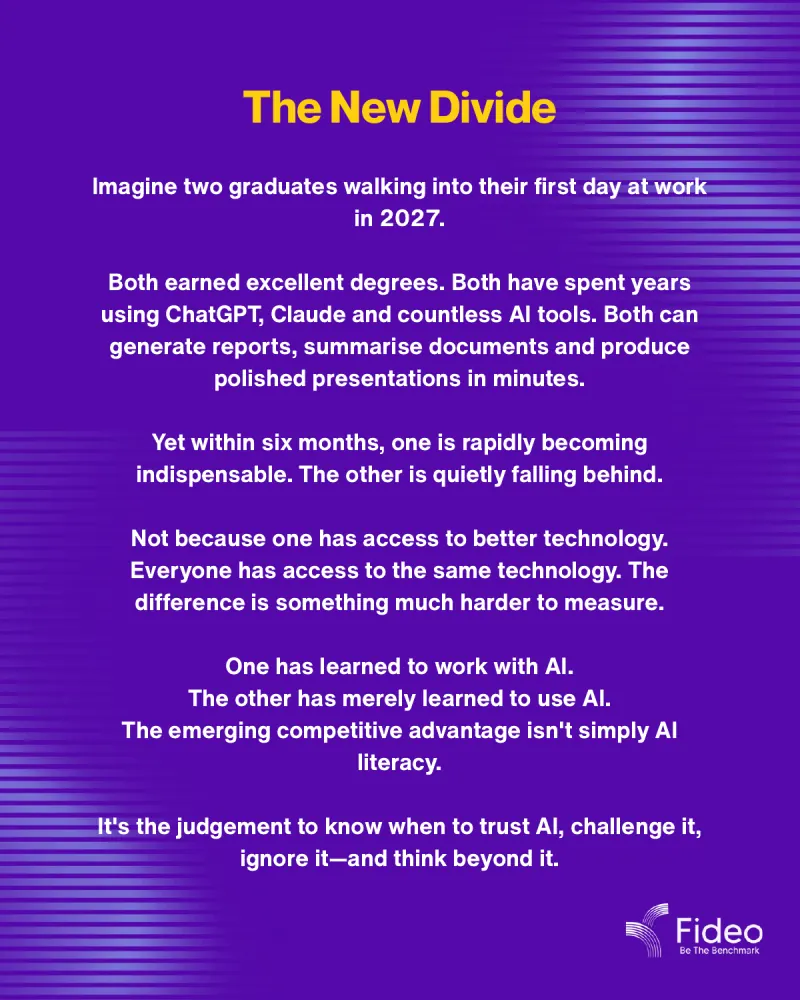
2 / 8 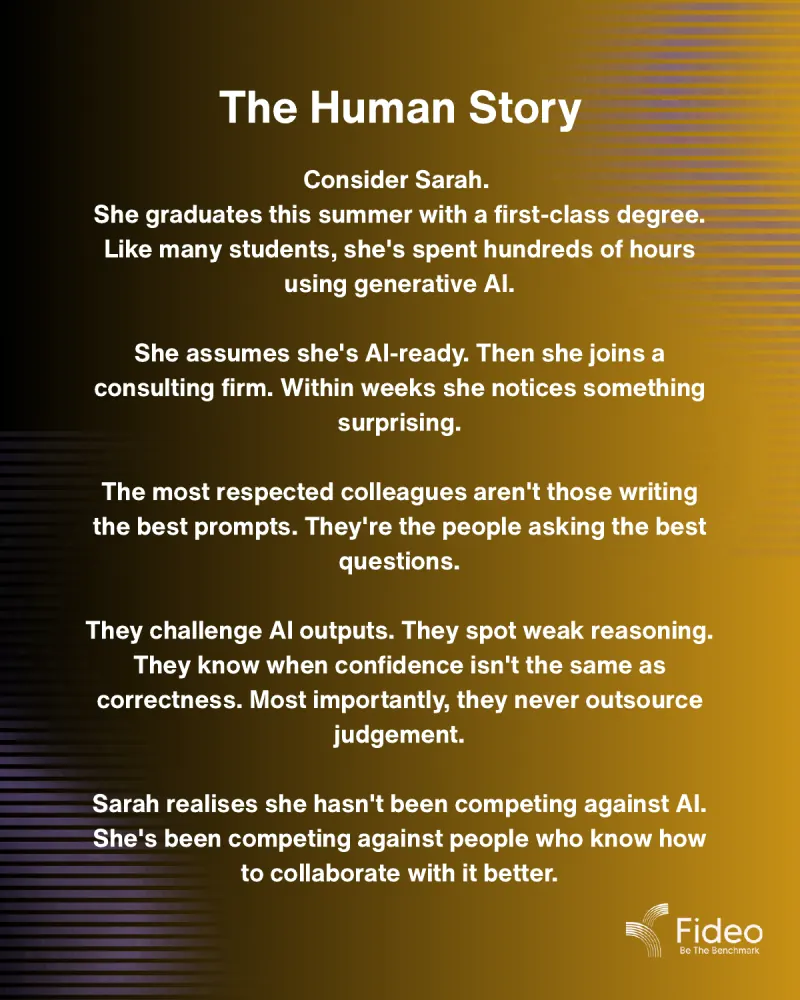
3 / 8 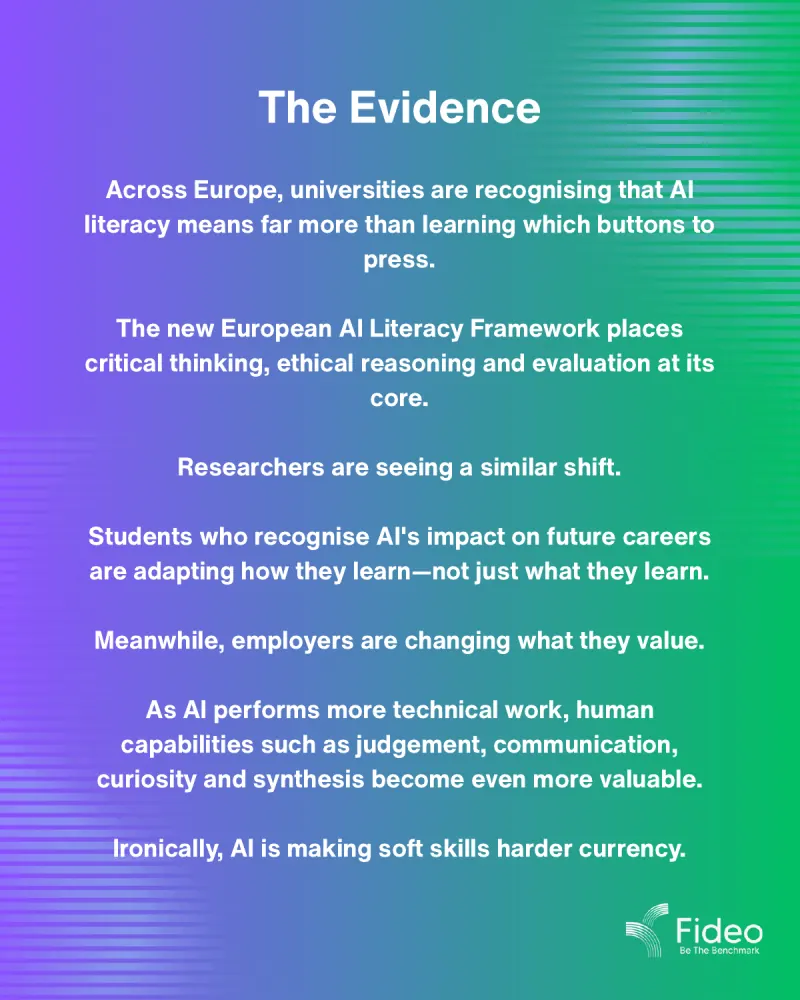
4 / 8 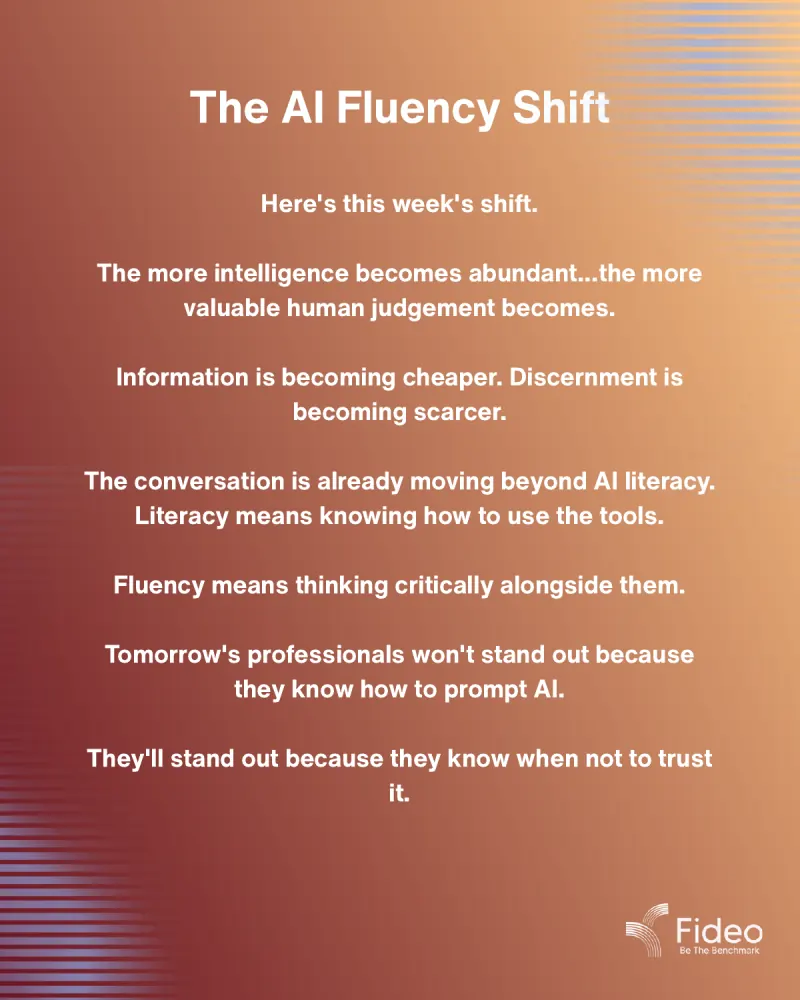
5 / 8 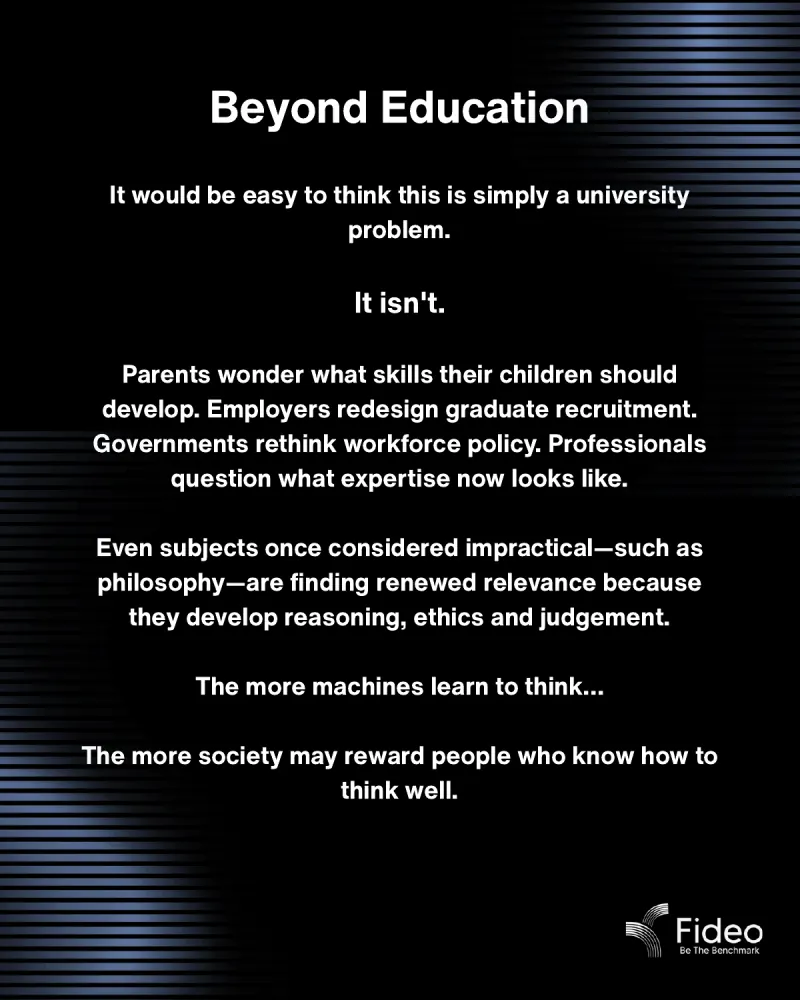
6 / 8 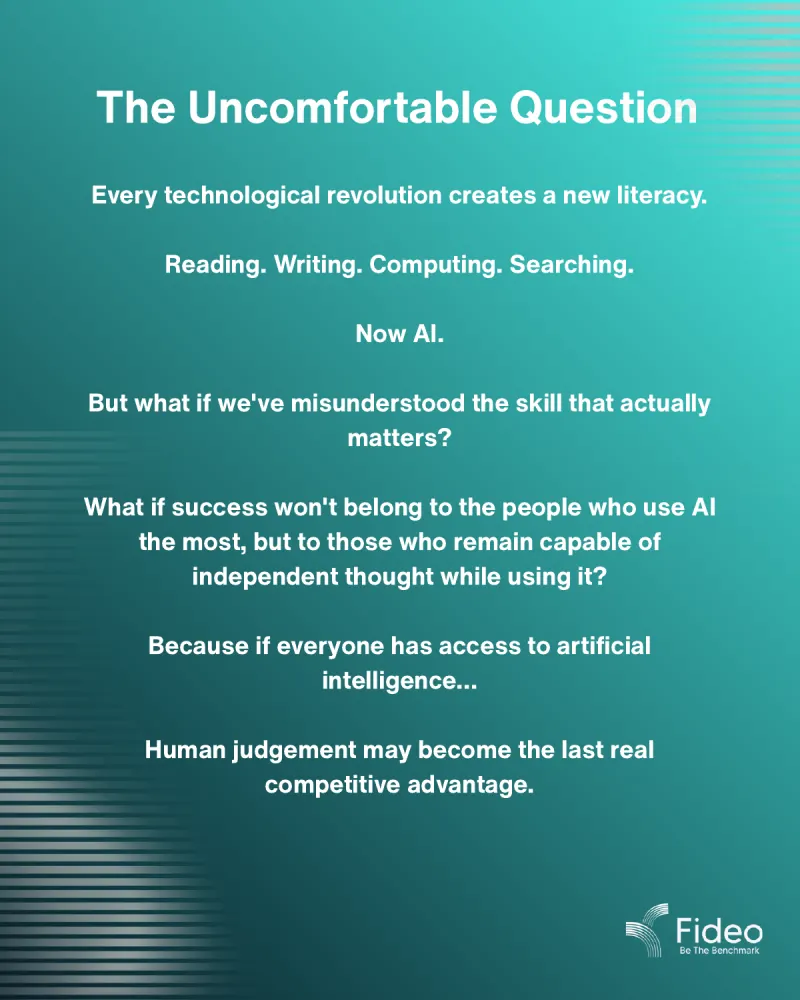
7 / 8 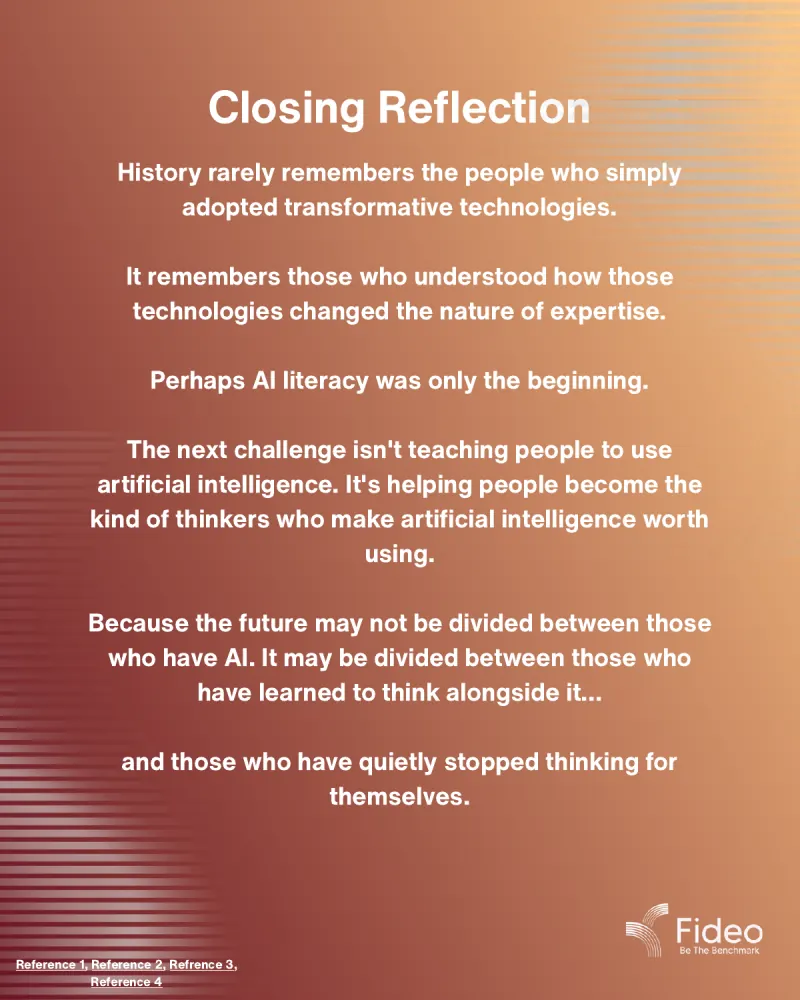
8 / 8
This week in 60 seconds
Why judgement, not prompting skill, may become the real competitive advantage for graduates and professionals
- Literacy means knowing how to use AI tools; fluency means thinking critically alongside them.
- The most respected colleagues are not the best prompt writers but the people who ask the best questions and never outsource judgement.
- As AI takes on more technical work, judgement, communication, curiosity and synthesis become more valuable.
- Information is becoming cheaper while discernment is becoming scarcer.
- The edition suggests human judgement may become the last real competitive advantage once everyone has AI.
Read this edition as text (3 min)
The New Divide
Imagine two graduates walking into their first day at work in 2027.
Both earned excellent degrees. Both have spent years using ChatGPT, Claude and countless AI tools. Both can generate reports, summarise documents and produce polished presentations in minutes.
Yet within six months, one is rapidly becoming indispensable. The other is quietly falling behind.
Not because one has access to better technology. Everyone has access to the same technology. The difference is something much harder to measure.
One has learned to work with AI. The other has merely learned to use AI. The emerging competitive advantage isn't simply AI literacy.
It's the judgement to know when to trust AI, challenge it, ignore it—and think beyond it.
The Human Story
Consider Sarah. She graduates this summer with a first-class degree. Like many students, she's spent hundreds of hours using generative AI.
She assumes she's AI-ready. Then she joins a consulting firm. Within weeks she notices something surprising.
The most respected colleagues aren't those writing the best prompts. They're the people asking the best questions.
They challenge AI outputs. They spot weak reasoning. They know when confidence isn't the same as correctness. Most importantly, they never outsource judgement.
Sarah realises she hasn't been competing against AI. She's been competing against people who know how to collaborate with it better.
The Evidence
Across Europe, universities are recognising that AI literacy means far more than learning which buttons to press.
The new European AI Literacy Framework places critical thinking, ethical reasoning and evaluation at its core.
Researchers are seeing a similar shift.
Students who recognise AI's impact on future careers are adapting how they learn—not just what they learn.
Meanwhile, employers are changing what they value.
As AI performs more technical work, human capabilities such as judgement, communication, curiosity and synthesis become even more valuable.
Ironically, AI is making soft skills harder currency.
The AI Fluency Shift
Here's this week's shift.
The more intelligence becomes abundant...the more valuable human judgement becomes.
Information is becoming cheaper. Discernment is becoming scarcer.
The conversation is already moving beyond AI literacy. Literacy means knowing how to use the tools.
Fluency means thinking critically alongside them.
Tomorrow's professionals won't stand out because they know how to prompt AI.
They'll stand out because they know when not to trust it.
Beyond Education
It would be easy to think this is simply a university problem.
It isn't.
Parents wonder what skills their children should develop. Employers redesign graduate recruitment. Governments rethink workforce policy. Professionals question what expertise now looks like.
Even subjects once considered impractical—such as philosophy—are finding renewed relevance because they develop reasoning, ethics and judgement.
The more machines learn to think...
The more society may reward people who know how to think well.
The Uncomfortable Question
Every technological revolution creates a new literacy.
Reading. Writing. Computing. Searching.
Now AI.
But what if we've misunderstood the skill that actually matters?
What if success won't belong to the people who use AI the most, but to those who remain capable of independent thought while using it?
Because if everyone has access to artificial intelligence...
Human judgement may become the last real competitive advantage.
Closing Reflection
History rarely remembers the people who simply adopted transformative technologies.
It remembers those who understood how those technologies changed the nature of expertise.
Perhaps AI literacy was only the beginning.
The next challenge isn't teaching people to use artificial intelligence. It's helping people become the kind of thinkers who make artificial intelligence worth using.
Because the future may not be divided between those who have AI. It may be divided between those who have learned to think alongside it...
and those who have quietly stopped thinking for themselves.
Reference 1, Reference 2, Refrence 3, Reference 4
Sources
- LinkedInlinkedin.com/posts/miltenoff_from-school-ai-literacy-to-university-ai-share-74861236887660
- LinkedInlinkedin.com/posts/charlottevonessen_new-research-on-the-relationship-between-share-748596
- LinkedInlinkedin.com/posts/paulpen_as-ai-gets-better-at-the-technical-work-ugcPost-748013576756286
- nytimes.comnytimes.com/2026/07/05/business/philosophy-majors-ai-jobs.html?unlocked_article_code=1.01A
More questions about this edition
Is this only a problem for universities?
No. The edition says parents, employers redesigning graduate recruitment, governments rethinking workforce policy and professionals questioning what expertise looks like are all affected.
What does the European AI Literacy Framework emphasise?
According to the edition, it places critical thinking, ethical reasoning and evaluation at its core, rather than simply learning which buttons to press.
Why are subjects like philosophy getting renewed attention?
The edition notes that subjects once considered impractical, such as philosophy, are finding renewed relevance because they develop reasoning, ethics and judgement.
Get the Zeitgeist every Friday
One email a week with the new edition. Unsubscribe in one click.
Check your inbox to confirm your subscription.
Please enter a valid email address and try again.