Week of 29 Jun to 3 Jul 2026
The education paradox: why AI makes the purpose of learning matter more
1 / 10 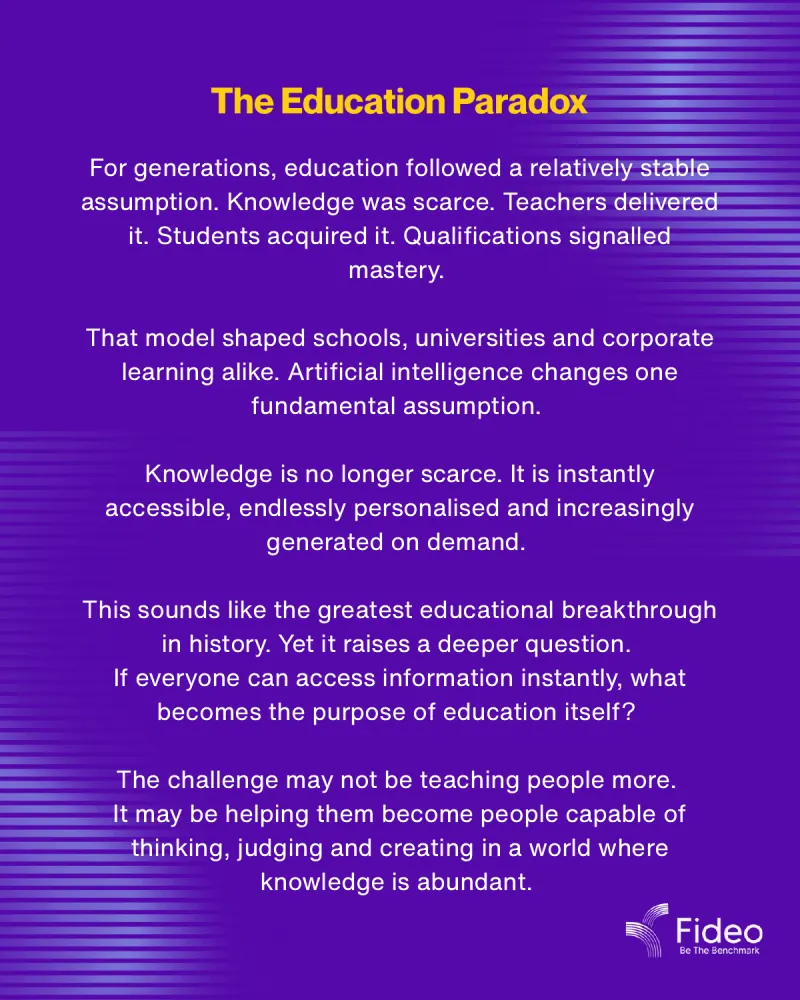
2 / 10 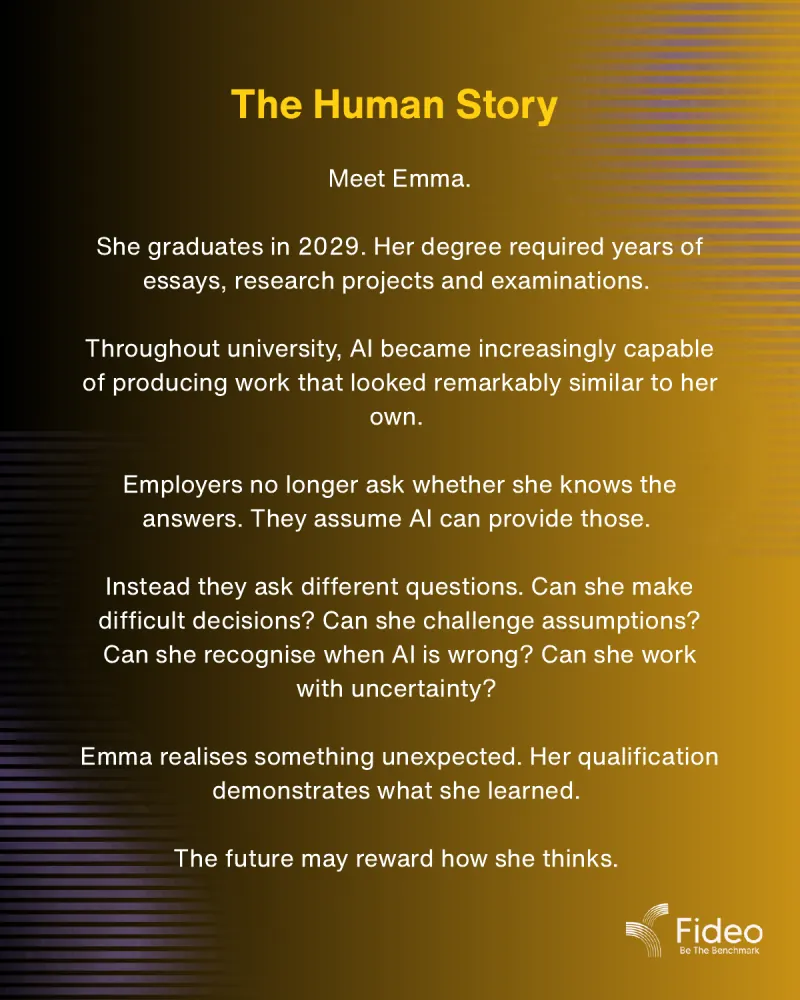
3 / 10 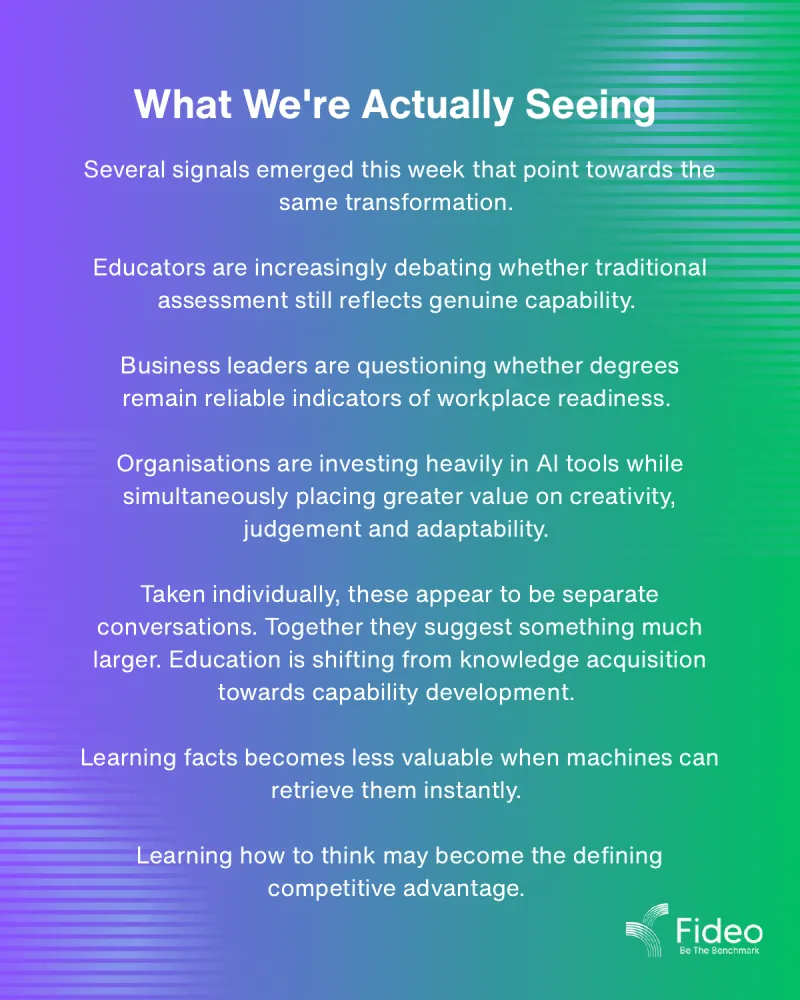
4 / 10 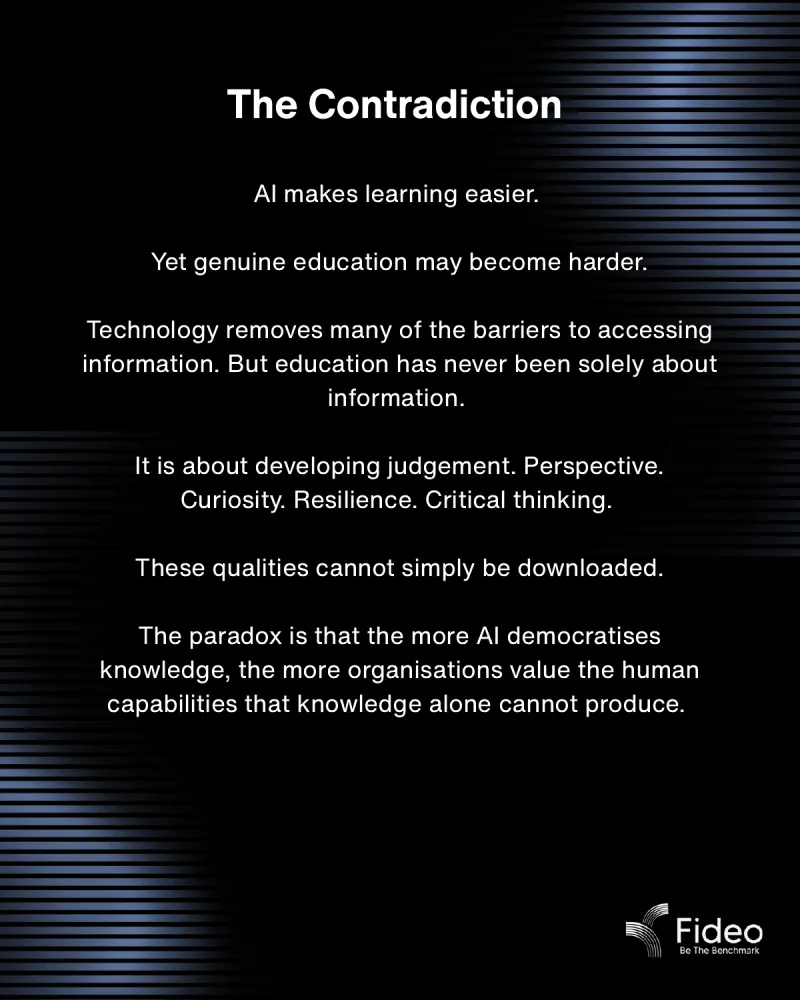
5 / 10 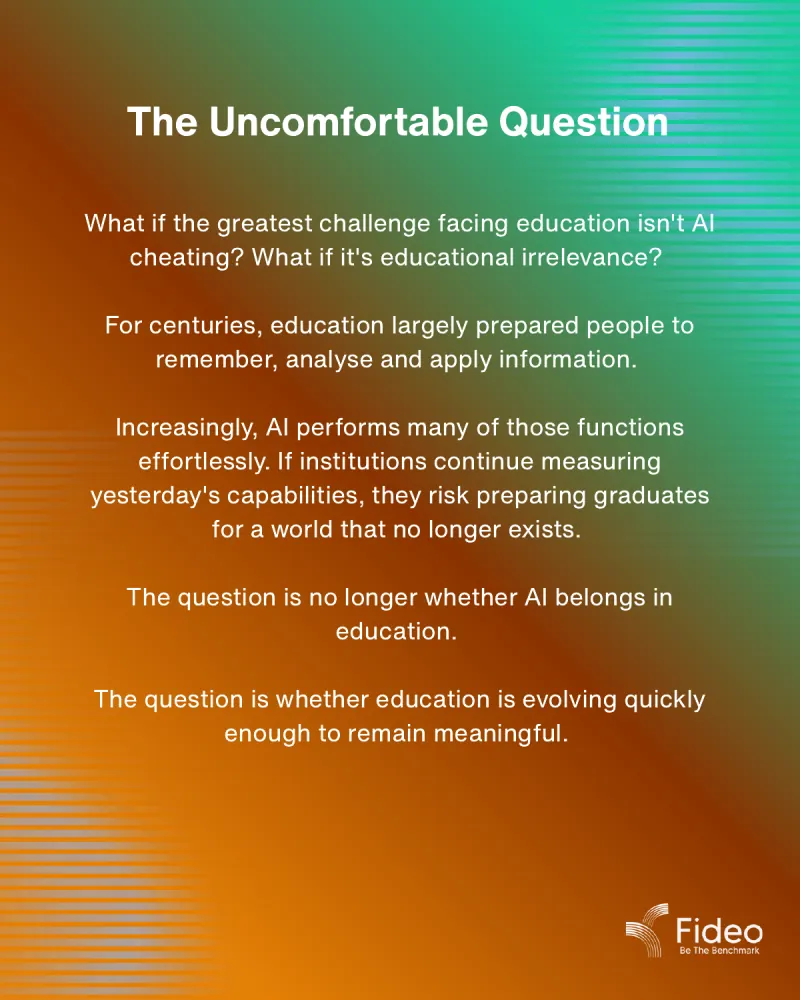
6 / 10 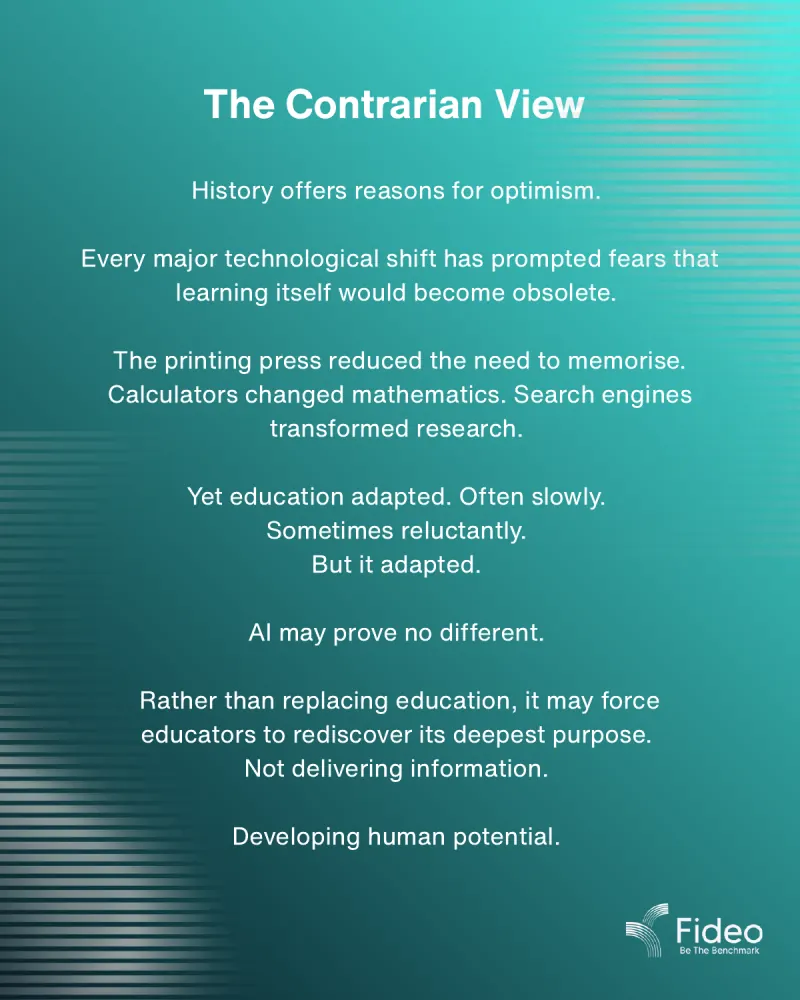
7 / 10 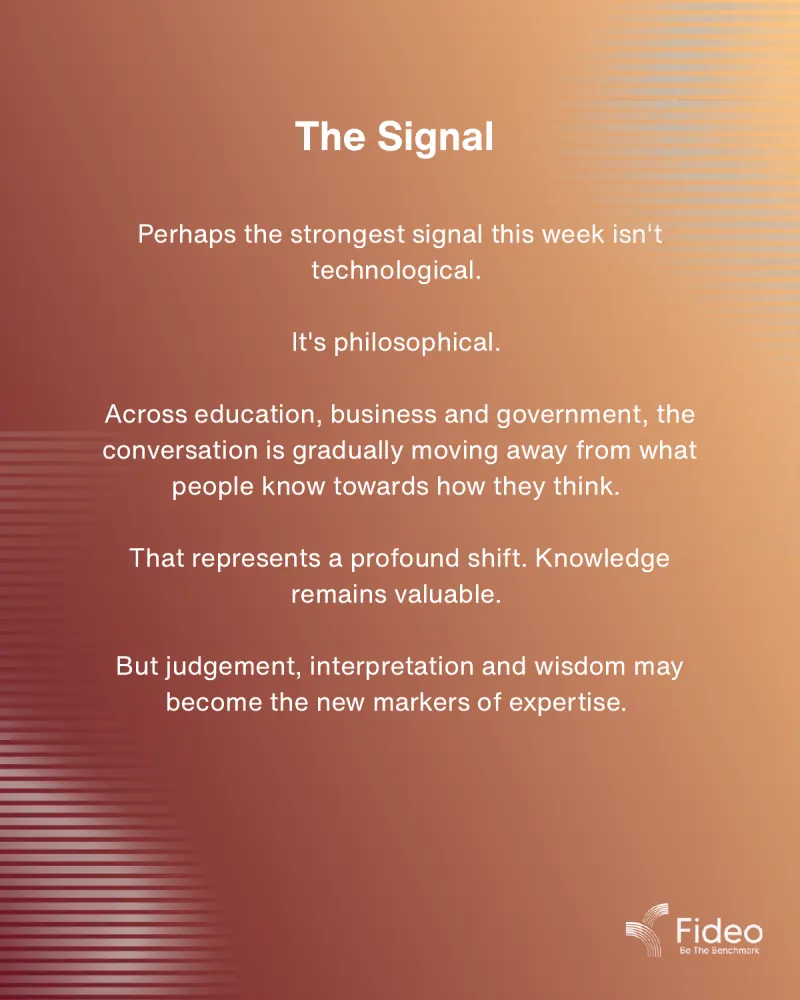
8 / 10 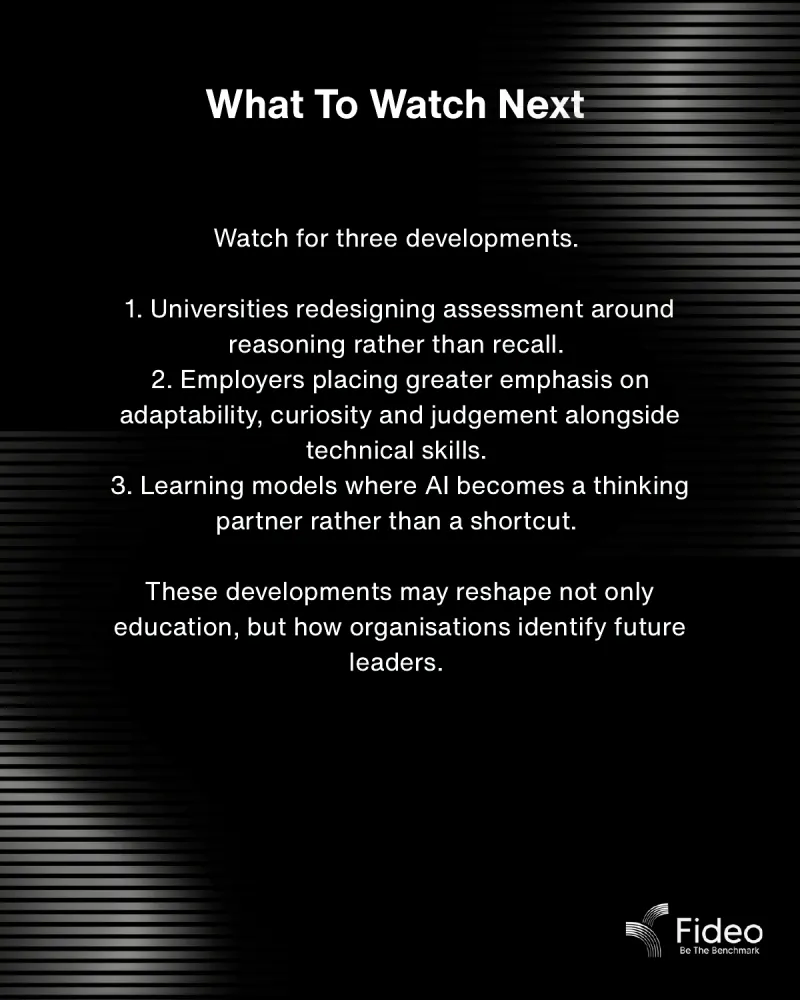
9 / 10 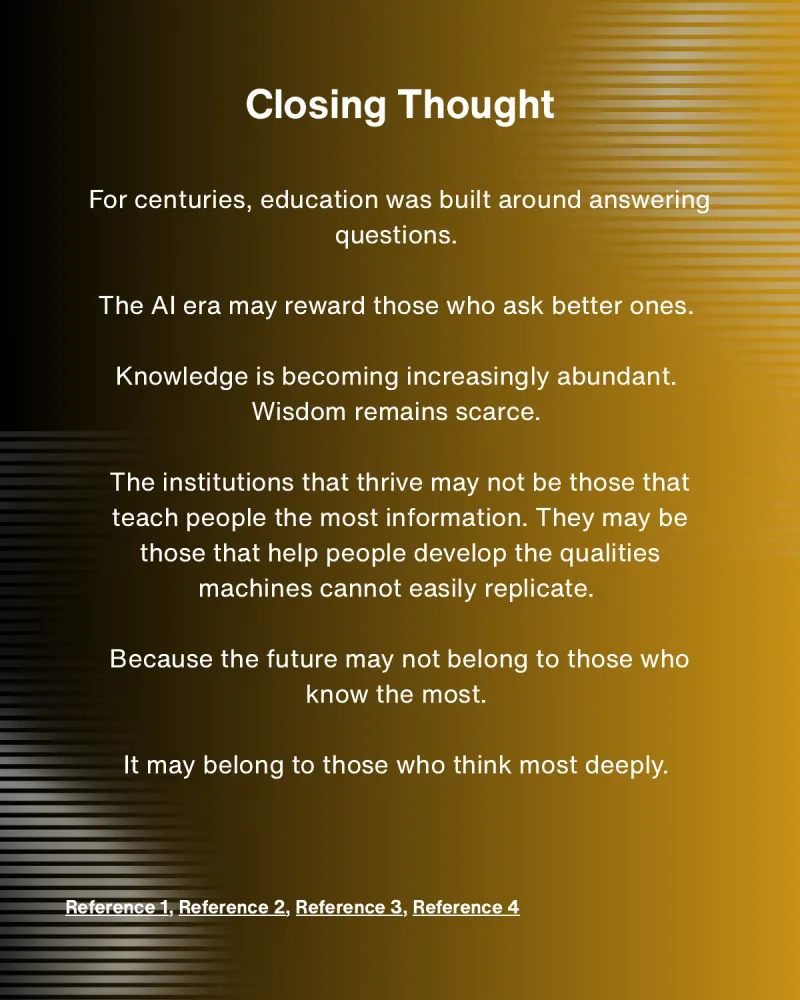
10 / 10
This week in 60 seconds
The more AI can teach us, the more important it becomes to understand what education is actually for.
- Education long assumed knowledge was scarce and qualifications signalled mastery. AI breaks that assumption by making knowledge instant, personalised and generated on demand.
- Employers increasingly assume AI can supply answers and instead ask whether graduates can make hard decisions, challenge assumptions, spot when AI is wrong and work with uncertainty.
- Debates on assessment, doubts about degrees and heavy AI investment alongside a premium on creativity point to education shifting from knowledge acquisition to capability development.
- The paradox: the more AI democratises knowledge, the more organisations value human qualities such as judgement, perspective, resilience and critical thinking.
- Watch for assessment built on reasoning not recall, employers prizing adaptability and judgement, and AI used as a thinking partner rather than a shortcut.
Read this edition as text (4 min)
The Education Paradox
For generations, education followed a relatively stable assumption. Knowledge was scarce. Teachers delivered it. Students acquired it. Qualifications signalled mastery.
That model shaped schools, universities and corporate learning alike. Artificial intelligence changes one fundamental assumption.
Knowledge is no longer scarce. It is instantly accessible, endlessly personalised and increasingly generated on demand.
This sounds like the greatest educational breakthrough in history. Yet it raises a deeper question. If everyone can access information instantly, what becomes the purpose of education itself?
The challenge may not be teaching people more. It may be helping them become people capable of thinking, judging and creating in a world where knowledge is abundant.
The Human Story
Meet Emma.
She graduates in 2029. Her degree required years of essays, research projects and examinations.
Throughout university, AI became increasingly capable of producing work that looked remarkably similar to her own.
Employers no longer ask whether she knows the answers. They assume AI can provide those.
Instead they ask different questions. Can she make difficult decisions? Can she challenge assumptions? Can she recognise when AI is wrong? Can she work with uncertainty?
Emma realises something unexpected. Her qualification demonstrates what she learned.
The future may reward how she thinks.
What We're Actually Seeing
Several signals emerged this week that point towards the same transformation.
Educators are increasingly debating whether traditional assessment still reflects genuine capability.
Business leaders are questioning whether degrees remain reliable indicators of workplace readiness.
Organisations are investing heavily in AI tools while simultaneously placing greater value on creativity, judgement and adaptability.
Taken individually, these appear to be separate conversations. Together they suggest something much larger. Education is shifting from knowledge acquisition towards capability development.
Learning facts becomes less valuable when machines can retrieve them instantly.
Learning how to think may become the defining competitive advantage.
The Contradiction
AI makes learning easier.
Yet genuine education may become harder.
Technology removes many of the barriers to accessing information. But education has never been solely about information.
It is about developing judgement. Perspective. Curiosity. Resilience. Critical thinking.
These qualities cannot simply be downloaded.
The paradox is that the more AI democratises knowledge, the more organisations value the human capabilities that knowledge alone cannot produce.
The Uncomfortable Question
What if the greatest challenge facing education isn't AI cheating? What if it's educational irrelevance?
For centuries, education largely prepared people to remember, analyse and apply information.
Increasingly, AI performs many of those functions effortlessly. If institutions continue measuring yesterday's capabilities, they risk preparing graduates for a world that no longer exists.
The question is no longer whether AI belongs in education.
The question is whether education is evolving quickly enough to remain meaningful.
The Contrarian View
History offers reasons for optimism.
Every major technological shift has prompted fears that learning itself would become obsolete.
The printing press reduced the need to memorise. Calculators changed mathematics. Search engines transformed research.
Yet education adapted. Often slowly. Sometimes reluctantly. But it adapted.
AI may prove no different.
Rather than replacing education, it may force educators to rediscover its deepest purpose. Not delivering information.
Developing human potential.
The Signal
Perhaps the strongest signal this week isn't technological.
It's philosophical.
Across education, business and government, the conversation is gradually moving away from what people know towards how they think.
That represents a profound shift. Knowledge remains valuable.
But judgement, interpretation and wisdom may become the new markers of expertise.
What To Watch Next
Watch for three developments.
1. Universities redesigning assessment around reasoning rather than recall. 2. Employers placing greater emphasis on adaptability, curiosity and judgement alongside technical skills. 3. Learning models where AI becomes a thinking partner rather than a shortcut.
These developments may reshape not only education, but how organisations identify future leaders.
Closing Thought
For centuries, education was built around answering questions.
The AI era may reward those who ask better ones.
Knowledge is becoming increasingly abundant. Wisdom remains scarce.
The institutions that thrive may not be those that teach people the most information. They may be those that help people develop the qualities machines cannot easily replicate.
Because the future may not belong to those who know the most.
It may belong to those who think most deeply.
Sources
- LinkedInlinkedin.com/posts/chrismayer01_liberalarts-highereducation-futureofemployability-share-74
- LinkedInlinkedin.com/posts/davidrichards_most-companies-are-spending-fortunes-trying-share-7476183
- LinkedInlinkedin.com/posts/cadigan_futureofwork-ai-talentstrategy-ugcPost-7467286561655697408-kXA9
- LinkedInlinkedin.com/posts/jonathan-boymal-448b5870_a-new-paper-by-mario-brcic-and-stjepan-frlji%C
More questions about this edition
Is AI cheating the biggest risk facing education?
The edition suggests the greater challenge may be educational irrelevance. If institutions keep measuring yesterday's capabilities, they risk preparing graduates for a world that no longer exists.
Has education faced a shift like this before?
Yes. The printing press reduced the need to memorise, calculators changed mathematics and search engines transformed research. Education adapted, often slowly, and AI may prove no different.
Does this mean knowledge no longer matters?
No. The edition says knowledge remains valuable, but judgement, interpretation and wisdom may become the new markers of expertise as the conversation moves from what people know to how they think.
Get the Zeitgeist every Friday
One email a week with the new edition. Unsubscribe in one click.
Check your inbox to confirm your subscription.
Please enter a valid email address and try again.