Week of 9 to 13 Mar 2026
AI access is spreading, but advantage is concentrating

1 / 8 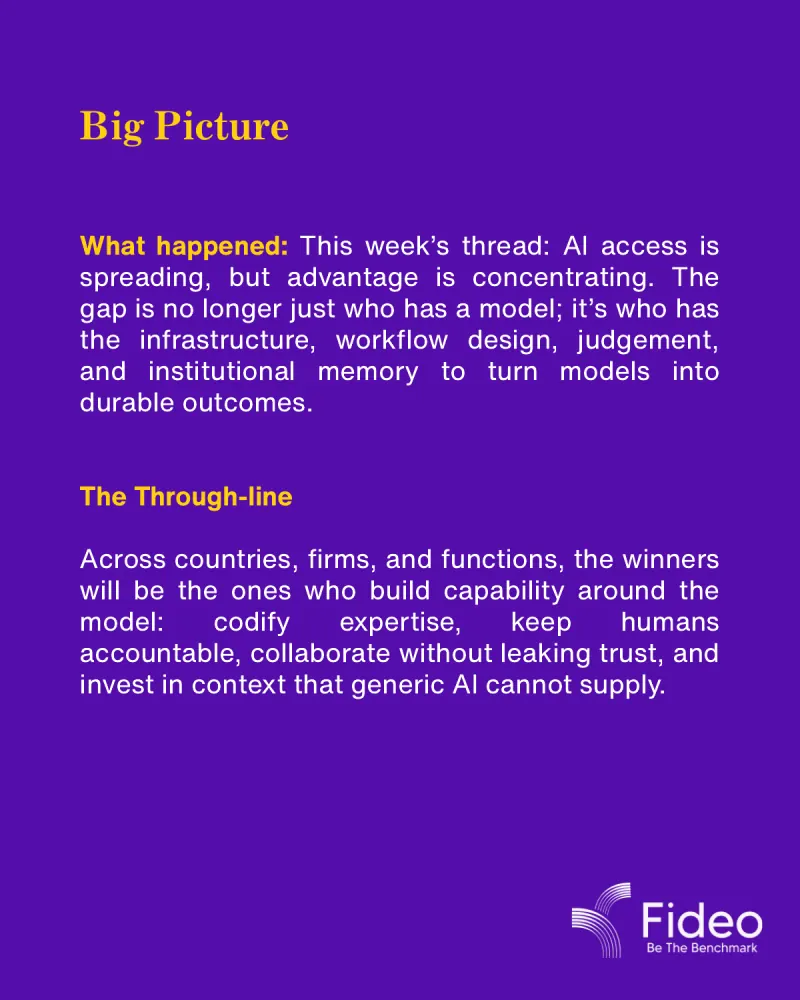
2 / 8 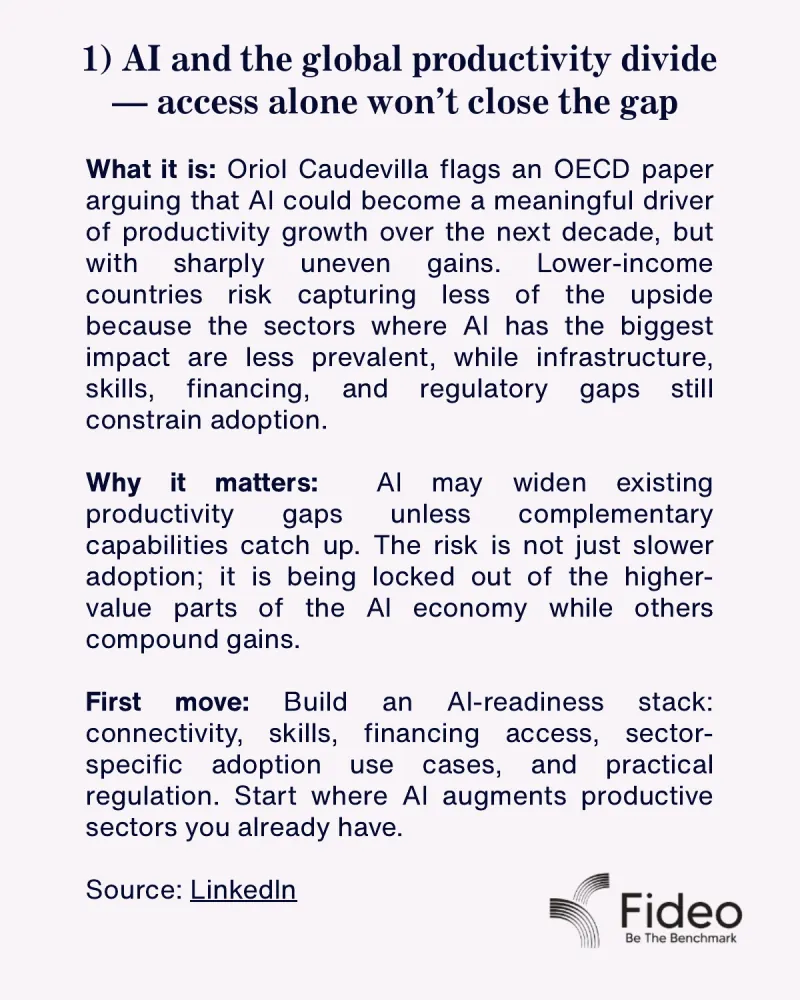
3 / 8 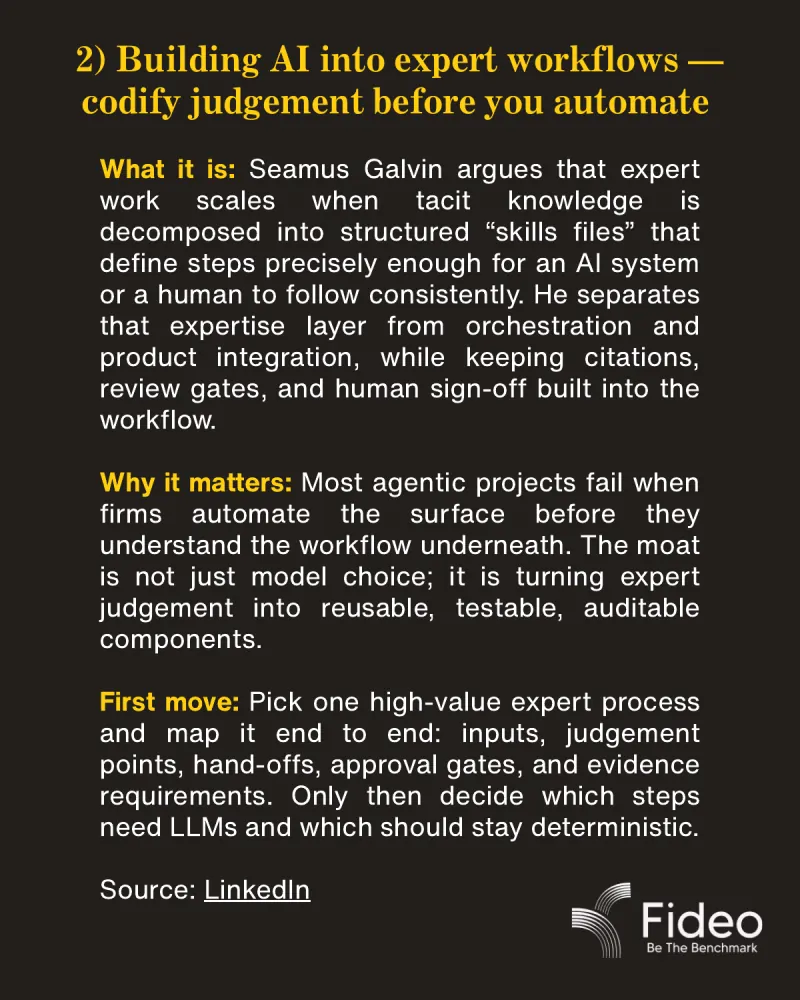
4 / 8 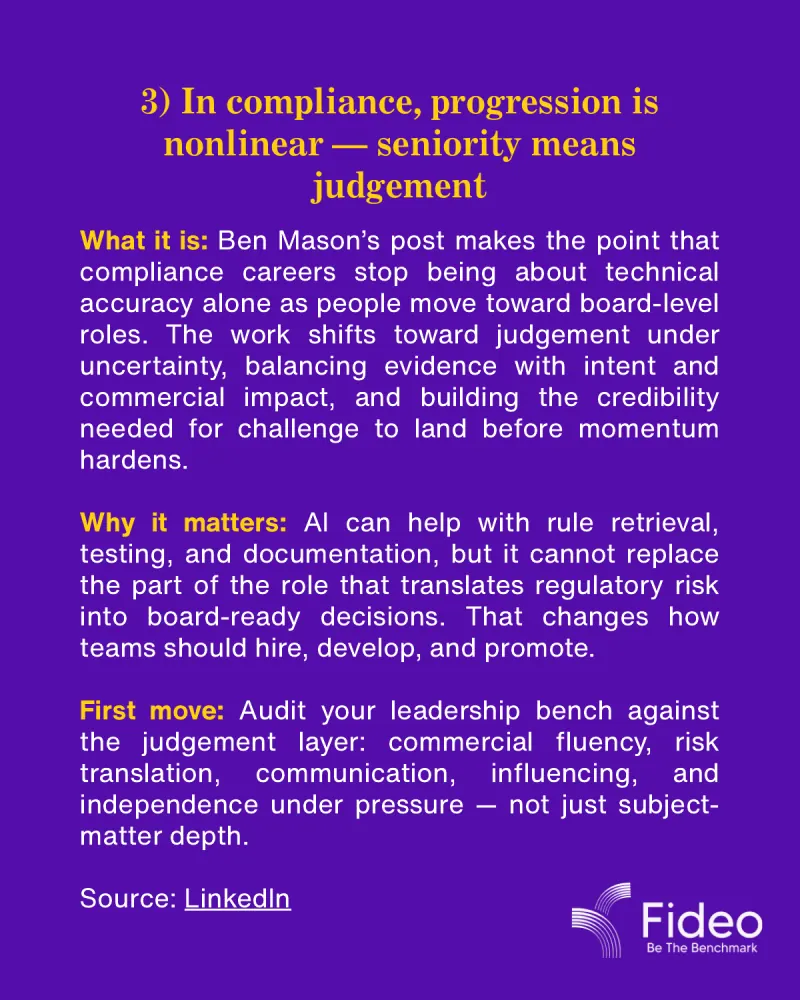
5 / 8 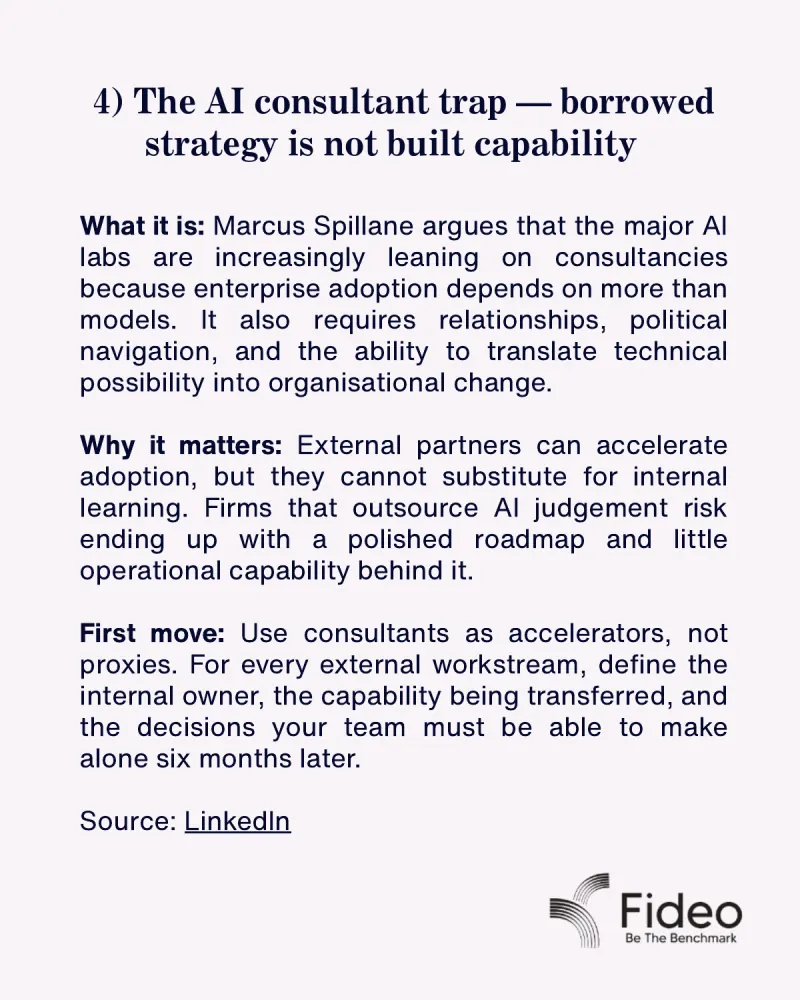
6 / 8 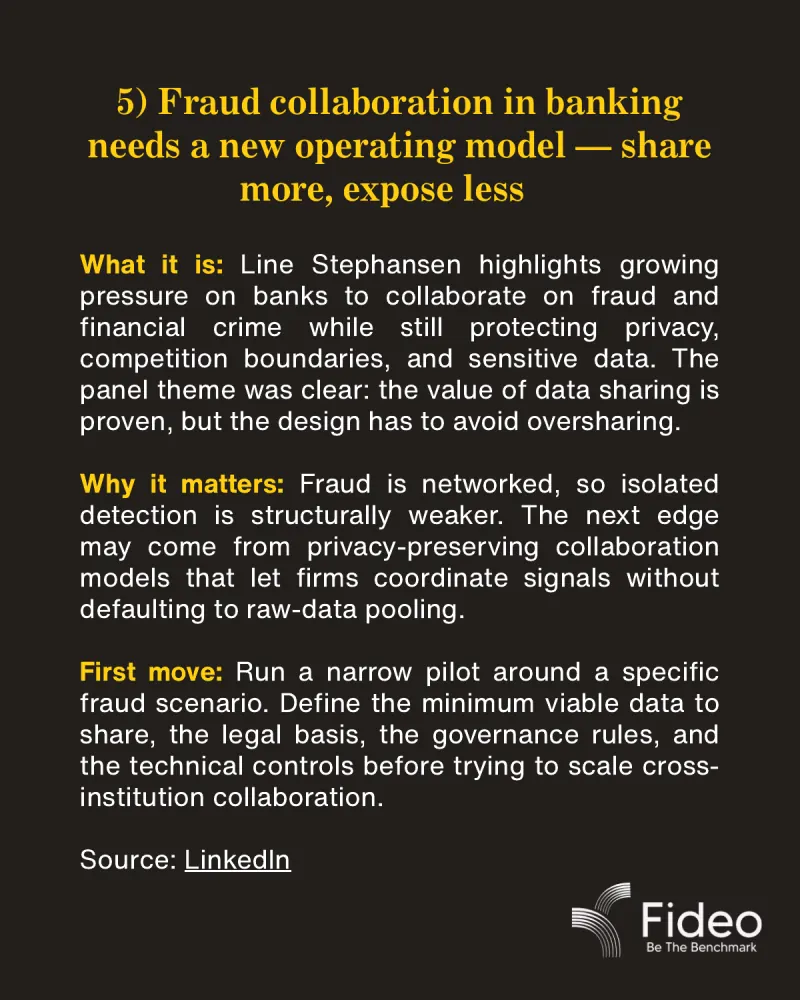
7 / 8 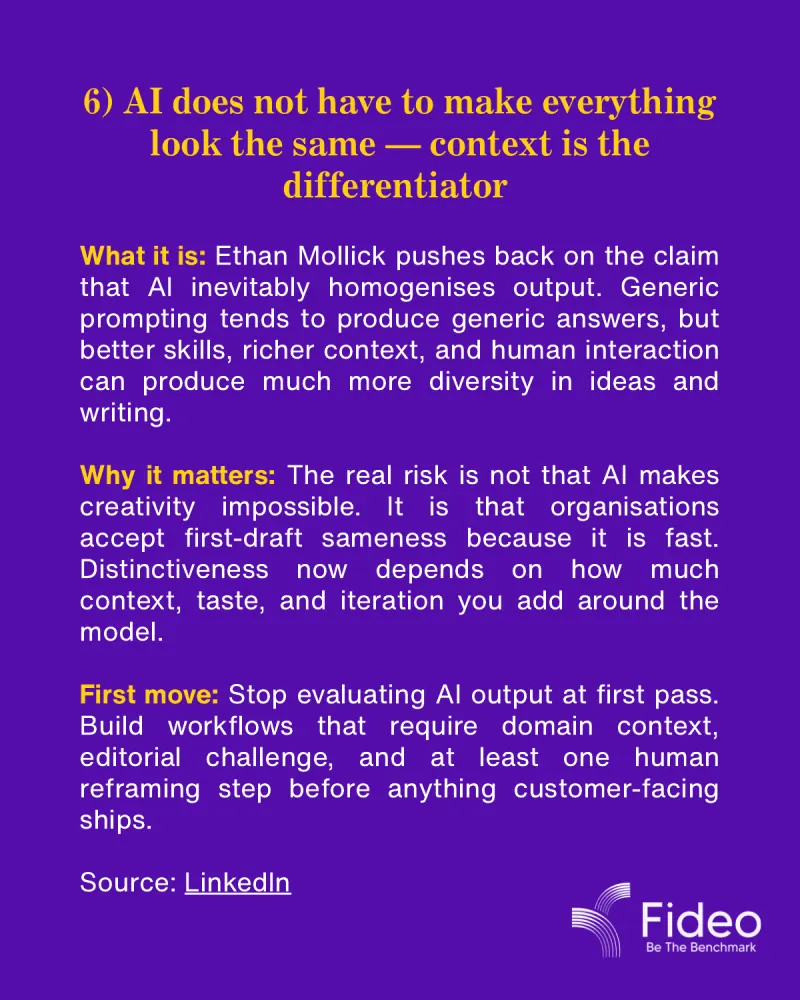
8 / 8
This week in 60 seconds
Infrastructure, workflow design, judgement and context decide who turns AI models into durable outcomes
- An OECD paper suggests AI could drive productivity growth over the next decade, but lower-income countries risk capturing less of the gain without infrastructure, skills, financing and regulation.
- Agentic projects often fail when firms automate the surface before understanding the workflow. Codifying expert judgement into testable, auditable components is the real moat.
- Senior compliance roles rest on judgement under uncertainty and translating regulatory risk into board-ready decisions, which AI cannot replace.
- Consultants can accelerate AI adoption but cannot substitute for internal learning. Define the internal owner and capability transferred for every external workstream.
- Fraud is networked, so banks need privacy-preserving collaboration that shares signals without pooling raw data, and AI output needs human context to avoid sameness.
Try this with your team
Pick one high-value expert process and map it end to end: inputs, judgement points, hand-offs, approval gates and evidence requirements. Only then decide which steps need LLMs and which should stay deterministic.
Read this edition as text (4 min)
Big Picture
What happened: This week’s thread: AI access is spreading, but advantage is concentrating. The gap is no longer just who has a model; it’s who has the infrastructure, workflow design, judgement, and institutional memory to turn models into durable outcomes.
The Through-line
Across countries, firms, and functions, the winners will be the ones who build capability around the model: codify expertise, keep humans accountable, collaborate without leaking trust, and invest in context that generic AI cannot supply.
1) AI and the global productivity divide — access alone won’t close the gap
What it is: Oriol Caudevilla flags an OECD paper arguing that AI could become a meaningful driver of productivity growth over the next decade, but with sharply uneven gains. Lower-income countries risk capturing less of the upside because the sectors where AI has the biggest impact are less prevalent, while infrastructure, skills, financing, and regulatory gaps still constrain adoption.
Why it matters: AI may widen existing productivity gaps unless complementary capabilities catch up. The risk is not just slower adoption; it is being locked out of the higher- value parts of the AI economy while others compound gains.
First move: Build an AI-readiness stack: connectivity, skills, financing access, sector- specific adoption use cases, and practical regulation. Start where AI augments productive sectors you already have.
Source: LinkedIn
2) Building AI into expert workflows — codify judgement before you automate
What it is: Seamus Galvin argues that expert work scales when tacit knowledge is decomposed into structured “skills files” that define steps precisely enough for an AI system or a human to follow consistently. He separates that expertise layer from orchestration and product integration, while keeping citations, review gates, and human sign-off built into the workflow.
Why it matters: Most agentic projects fail when firms automate the surface before they understand the workflow underneath. The moat is not just model choice; it is turning expert judgement into reusable, testable, auditable components.
First move: Pick one high-value expert process and map it end to end: inputs, judgement points, hand-offs, approval gates, and evidence requirements. Only then decide which steps need LLMs and which should stay deterministic.
Source: LinkedIn
3) In compliance, progression is nonlinear — seniority means judgement
What it is: Ben Mason’s post makes the point that compliance careers stop being about technical accuracy alone as people move toward board-level roles. The work shifts toward judgement under uncertainty, balancing evidence with intent and commercial impact, and building the credibility needed for challenge to land before momentum hardens.
Why it matters: AI can help with rule retrieval, testing, and documentation, but it cannot replace the part of the role that translates regulatory risk into board-ready decisions. That changes how teams should hire, develop, and promote.
First move: Audit your leadership bench against the judgement layer: commercial fluency, risk translation, communication, influencing, and independence under pressure — not just subject- matter depth.
Source: LinkedIn
4) The AI consultant trap — borrowed strategy is not built capability
What it is: Marcus Spillane argues that the major AI labs are increasingly leaning on consultancies because enterprise adoption depends on more than models. It also requires relationships, political navigation, and the ability to translate technical possibility into organisational change.
Why it matters: External partners can accelerate adoption, but they cannot substitute for internal learning. Firms that outsource AI judgement risk ending up with a polished roadmap and little operational capability behind it.
First move: Use consultants as accelerators, not proxies. For every external workstream, define the internal owner, the capability being transferred, and the decisions your team must be able to make alone six months later.
Source: LinkedIn
5) Fraud collaboration in banking needs a new operating model — share more, expose less
What it is: Line Stephansen highlights growing pressure on banks to collaborate on fraud and financial crime while still protecting privacy, competition boundaries, and sensitive data. The panel theme was clear: the value of data sharing is proven, but the design has to avoid oversharing.
Why it matters: Fraud is networked, so isolated detection is structurally weaker. The next edge may come from privacy-preserving collaboration models that let firms coordinate signals without defaulting to raw-data pooling.
First move: Run a narrow pilot around a specific fraud scenario. Define the minimum viable data to share, the legal basis, the governance rules, and the technical controls before trying to scale cross- institution collaboration.
Source: LinkedIn
6) AI does not have to make everything look the same — context is the differentiator
What it is: Ethan Mollick pushes back on the claim that AI inevitably homogenises output. Generic prompting tends to produce generic answers, but better skills, richer context, and human interaction can produce much more diversity in ideas and writing.
Why it matters: The real risk is not that AI makes creativity impossible. It is that organisations accept first-draft sameness because it is fast. Distinctiveness now depends on how much context, taste, and iteration you add around the model.
First move: Stop evaluating AI output at first pass. Build workflows that require domain context, editorial challenge, and at least one human reframing step before anything customer-facing ships.
Source: LinkedIn
Sources
- LinkedInlinkedin.com/posts/oriolcaudevilla_ai-global-productivity-divide-ugcPost-74219472025765928
- medium.commedium.com/@seamusgalvin/building-ai-into-expert-workflows-what-ive-found-so-far-237f6e5c9
- LinkedInlinkedin.com/posts/benmason_compliance-career-readiness-checklist-ugcPost-7436785984152891
- LinkedInlinkedin.com/pulse/ai-consultant-trap-why-labs-need-mckinsey-marcus-spillane-f6whc/
- LinkedInlinkedin.com/posts/linelyngdahl_what-if-banks-could-collaborate-on-fraud-ugcPost-743779538
- LinkedInlinkedin.com/posts/emollick_the-claim-that-ai-is-inevitably-homogenizing-ugcPost-743728736
More questions about this edition
Why might lower-income countries gain less from AI?
The edition notes that the sectors where AI has the biggest impact are less prevalent there, and gaps in infrastructure, skills, financing and regulation still constrain adoption.
How should a bank start collaborating on fraud without oversharing?
Run a narrow pilot around a specific fraud scenario, defining the minimum viable data to share, the legal basis, the governance rules and the technical controls before scaling across institutions.
Does AI inevitably make everyone's output look the same?
No. Generic prompting tends to give generic answers, but better skills, richer context and human interaction can produce much more diversity. The risk is accepting first-draft sameness because it is fast.
Get the Zeitgeist every Friday
One email a week with the new edition. Unsubscribe in one click.
Check your inbox to confirm your subscription.
Please enter a valid email address and try again.