Week of 2 to 6 Mar 2026
Capability isn't the limiter for AI, credibility is
1 / 9 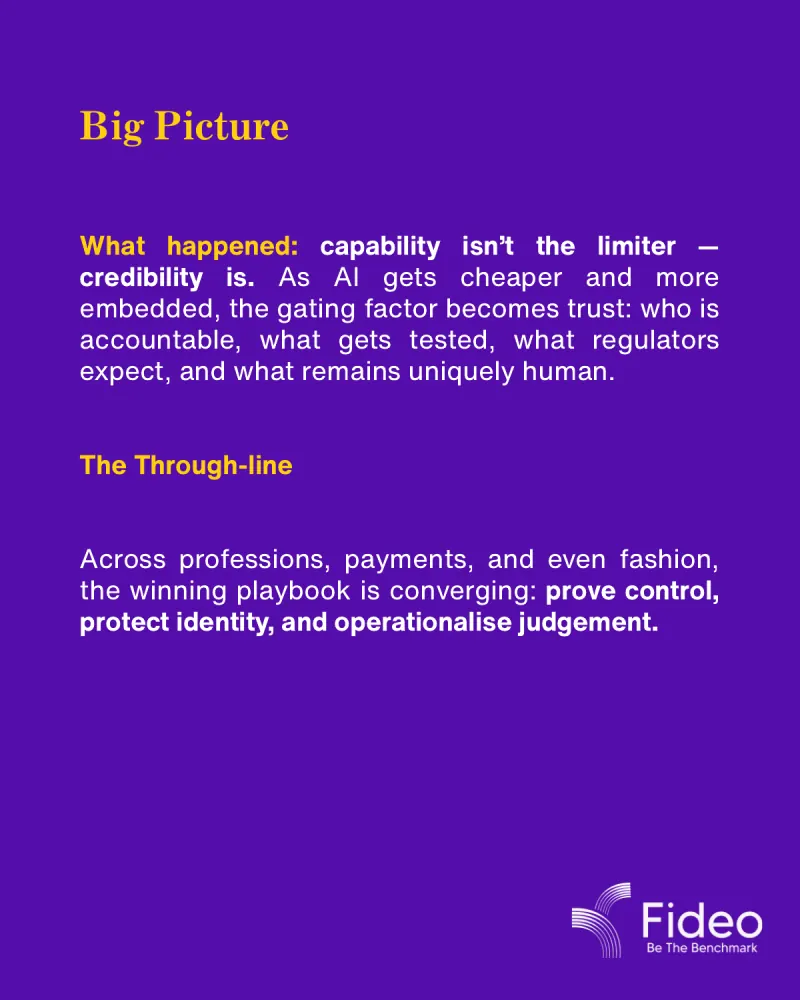
2 / 9 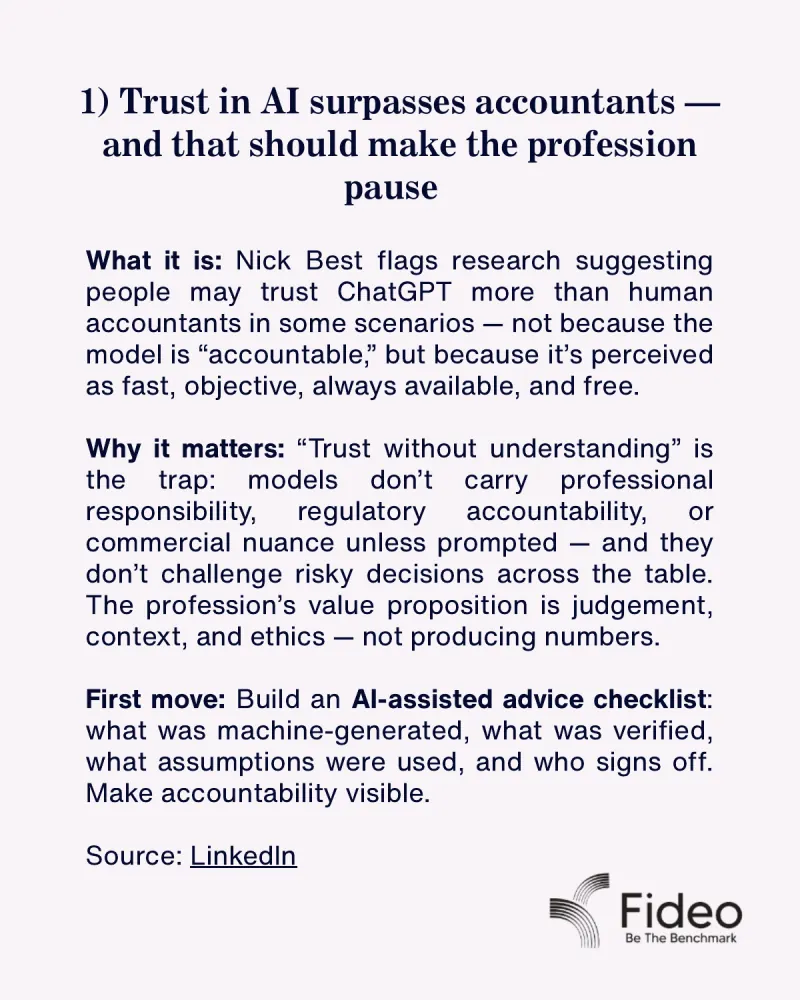
3 / 9 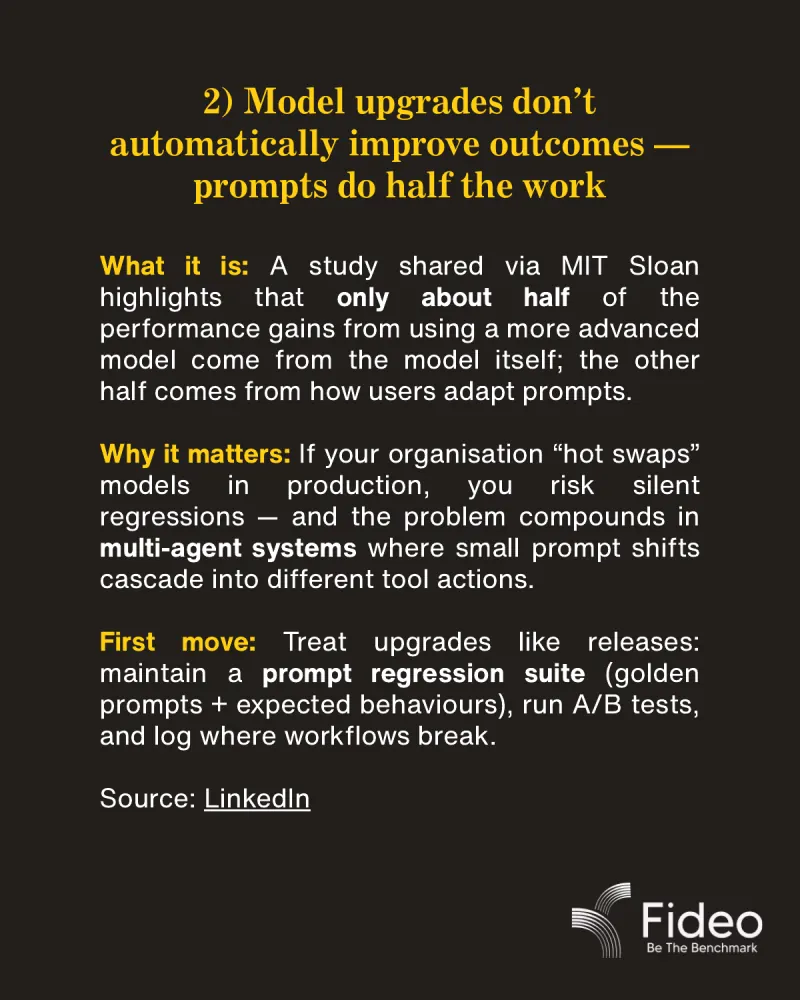
4 / 9 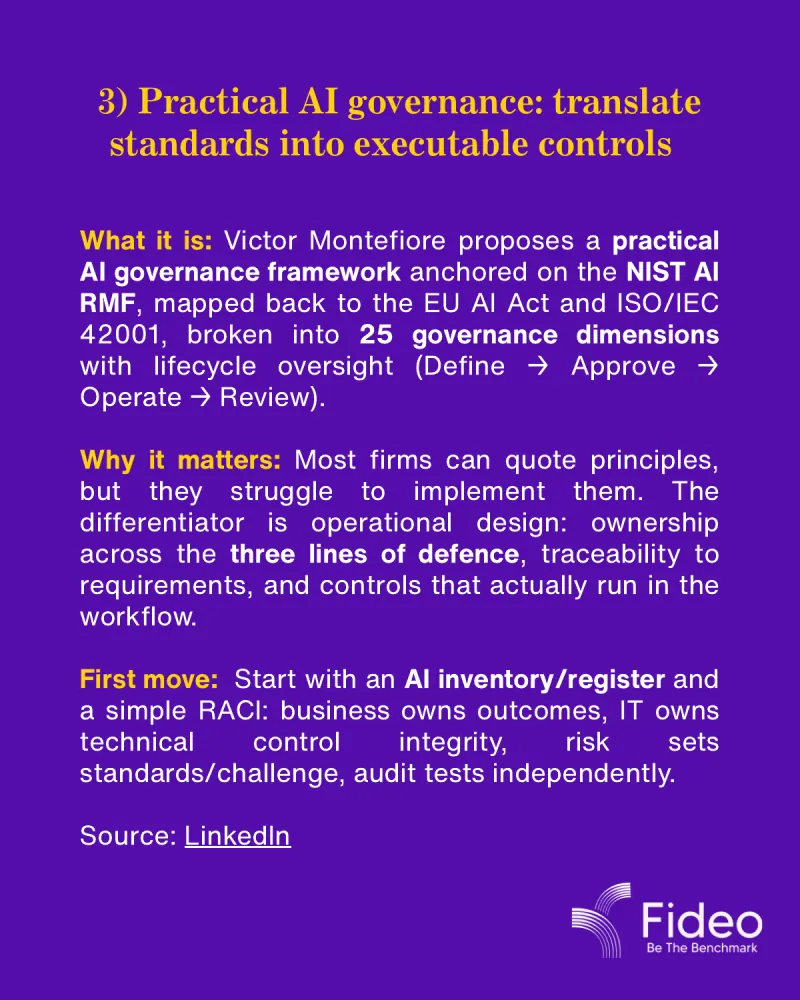
5 / 9 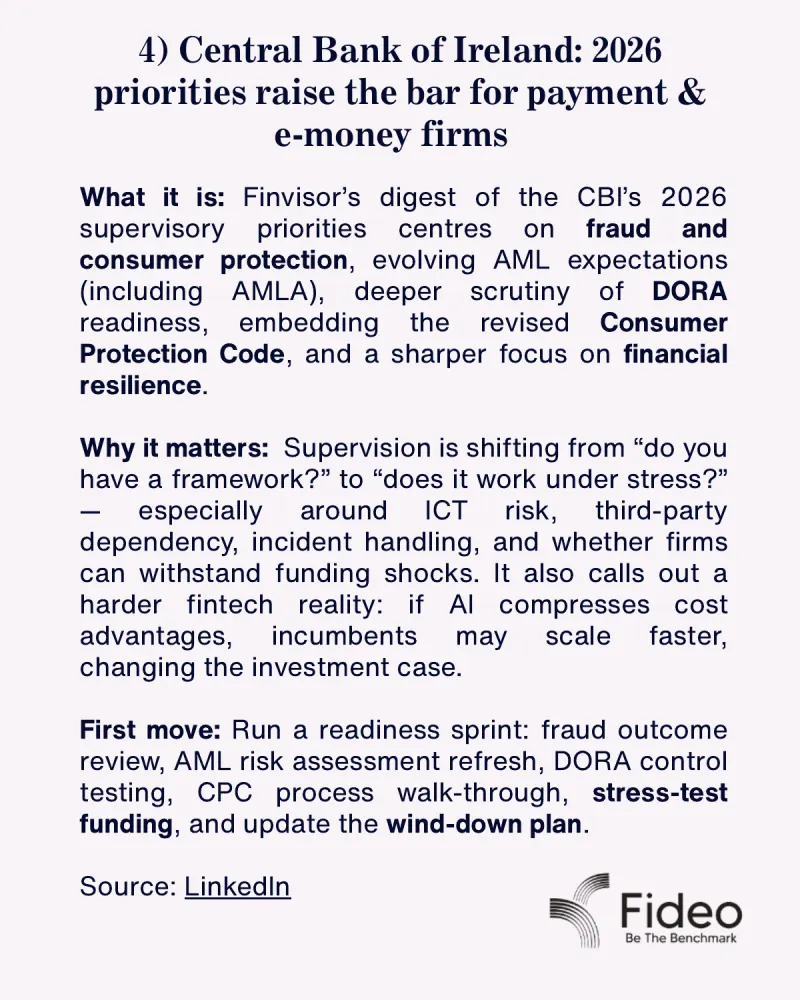
6 / 9 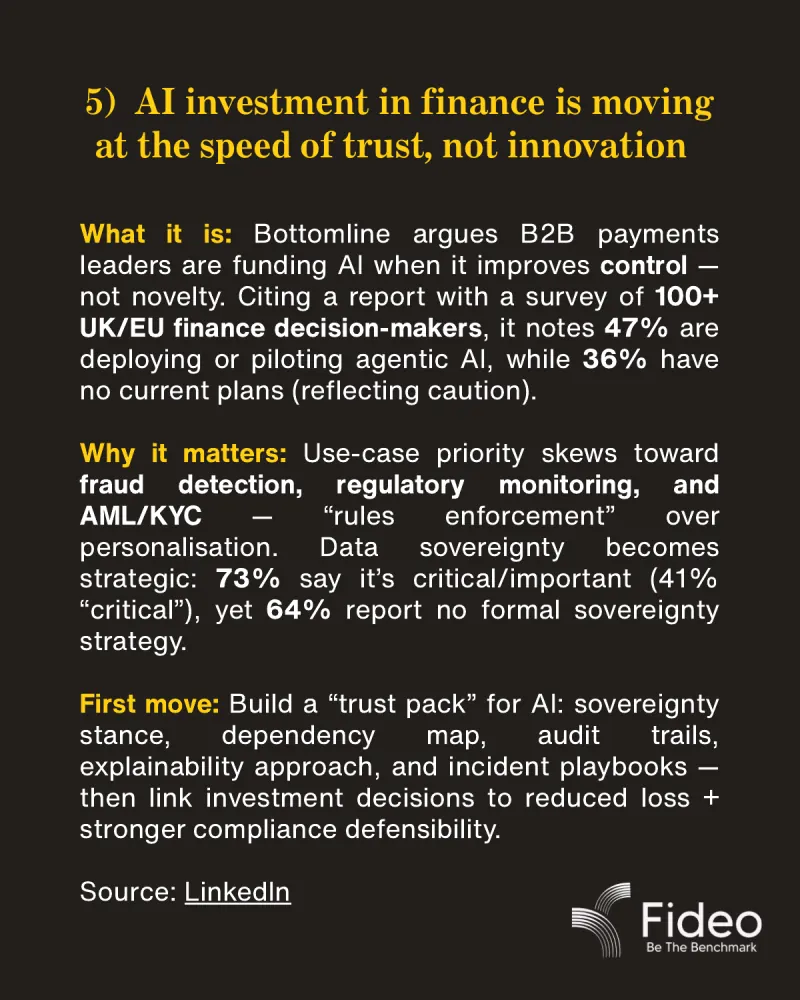
7 / 9 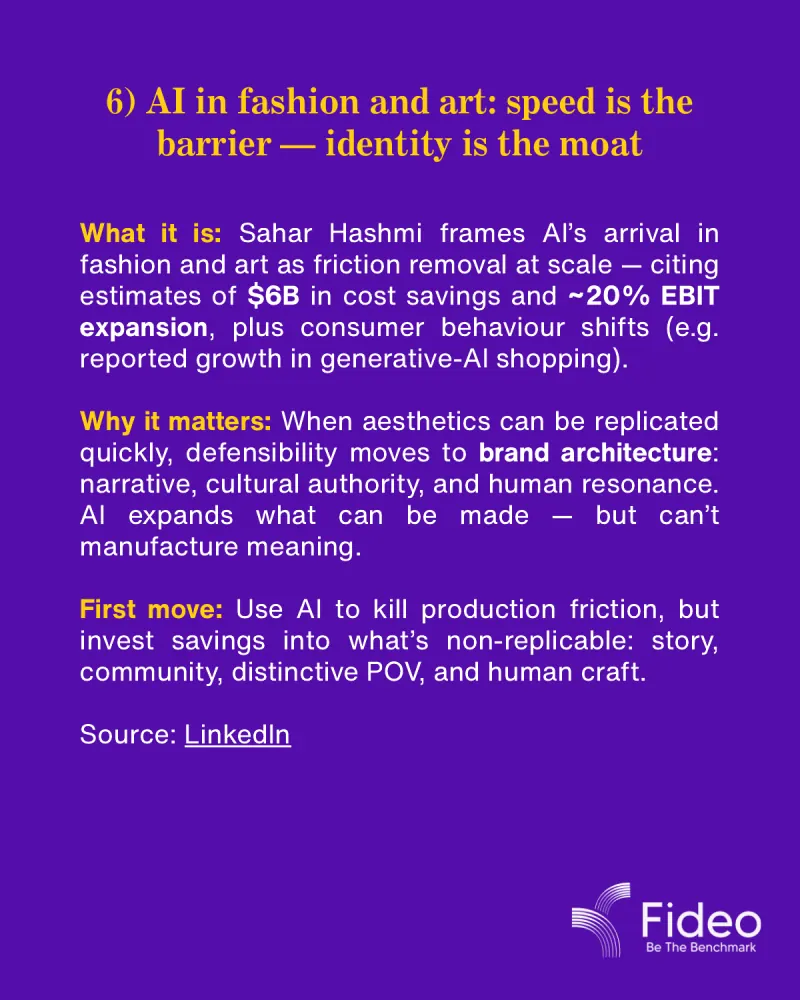
8 / 9 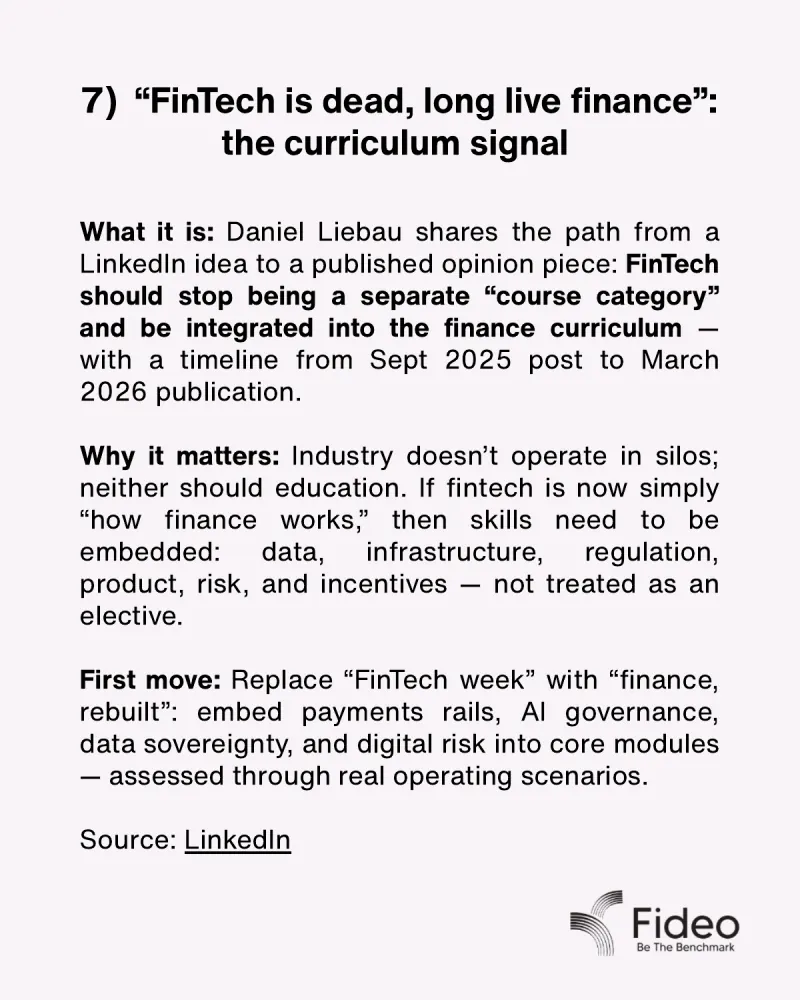
9 / 9
This week in 60 seconds
Week of 2-8 March 2026: accountability, governance, supervision and curriculum all point to trust as the gating factor
- Research suggests people may trust ChatGPT more than accountants in some scenarios, yet models carry no professional or regulatory accountability.
- A study shared via MIT Sloan finds only about half of the gains from a more advanced model come from the model itself; the rest comes from how users adapt prompts.
- In a survey of 100+ UK/EU finance decision-makers, 47% are deploying or piloting agentic AI, and 73% call data sovereignty critical or important, yet 64% have no formal strategy.
- The Central Bank of Ireland's 2026 priorities shift supervision from having a framework to proving it works under stress, covering fraud, AML, DORA and financial resilience.
- Fintech should be integrated into the core finance curriculum rather than taught as a separate elective.
Try this with your team
Treat model upgrades like releases: build a prompt regression suite of golden prompts and expected behaviours, run A/B tests before swapping models in production, and log where workflows break.
Read this edition as text (5 min)
Big Picture
What happened: capability isn’t the limiter — credibility is. As AI gets cheaper and more embedded, the gating factor becomes trust: who is accountable, what gets tested, what regulators expect, and what remains uniquely human.
The Through-line
Across professions, payments, and even fashion, the winning playbook is converging: prove control, protect identity, and operationalise judgement.
1) Trust in AI surpasses accountants — and that should make the profession pause
What it is: Nick Best flags research suggesting people may trust ChatGPT more than human accountants in some scenarios — not because the model is “accountable,” but because it’s perceived as fast, objective, always available, and free.
Why it matters: “Trust without understanding” is the trap: models don’t carry professional responsibility, regulatory accountability, or commercial nuance unless prompted — and they don’t challenge risky decisions across the table. The profession’s value proposition is judgement, context, and ethics — not producing numbers.
First move: Build an AI-assisted advice checklist : what was machine-generated, what was verified, what assumptions were used, and who signs off. Make accountability visible.
Source: LinkedIn
2) Model upgrades don’t automatically improve outcomes — prompts do half the work
What it is: A study shared via MIT Sloan highlights that only about half of the performance gains from using a more advanced model come from the model itself; the other half comes from how users adapt prompts.
Why it matters: If your organisation “hot swaps” models in production, you risk silent regressions — and the problem compounds in multi-agent systems where small prompt shifts cascade into different tool actions.
First move: Treat upgrades like releases: maintain a prompt regression suite (golden prompts + expected behaviours), run A/B tests, and log where workflows break.
Source: LinkedIn
3) Practical AI governance: translate standards into executable controls
What it is: Victor Montefiore proposes a practical AI governance framework anchored on the NIST AI RMF , mapped back to the EU AI Act and ISO/IEC 42001, broken into 25 governance dimensions with lifecycle oversight (Define → Approve → Operate → Review).
Why it matters: Most firms can quote principles, but they struggle to implement them. The differentiator is operational design: ownership across the three lines of defence , traceability to requirements, and controls that actually run in the workflow.
First move: Start with an AI inventory/register and a simple RACI: business owns outcomes, IT owns technical control integrity, risk sets standards/challenge, audit tests independently.
Source: LinkedIn
4) Central Bank of Ireland: 2026 priorities raise the bar for payment & e-money firms
What it is: Finvisor’s digest of the CBI’s 2026 supervisory priorities centres on fraud and consumer protection , evolving AML expectations (including AMLA), deeper scrutiny of DORA readiness, embedding the revised Consumer Protection Code , and a sharper focus on financial resilience .
Why it matters: Supervision is shifting from “do you have a framework?” to “does it work under stress?” — especially around ICT risk, third-party dependency, incident handling, and whether firms can withstand funding shocks. It also calls out a harder fintech reality: if AI compresses cost advantages, incumbents may scale faster, changing the investment case.
First move: Run a readiness sprint: fraud outcome review, AML risk assessment refresh, DORA control testing, CPC process walk-through, stress-test funding , and update the wind-down plan .
Source: LinkedIn
5) AI investment in finance is moving at the speed of trust, not innovation
What it is: Bottomline argues B2B payments leaders are funding AI when it improves control — not novelty. Citing a report with a survey of 100+ UK/EU finance decision-makers , it notes 47% are deploying or piloting agentic AI, while 36% have no current plans (reflecting caution).
Why it matters: Use-case priority skews toward fraud detection, regulatory monitoring, and AML/KYC — “rules enforcement” over personalisation. Data sovereignty becomes strategic: 73% say it’s critical/important (41% “critical”), yet 64% report no formal sovereignty strategy.
First move: Build a “trust pack” for AI: sovereignty stance, dependency map, audit trails, explainability approach, and incident playbooks — then link investment decisions to reduced loss + stronger compliance defensibility.
Source: LinkedIn
6) AI in fashion and art: speed is the barrier — identity is the moat
What it is: Sahar Hashmi frames AI’s arrival in fashion and art as friction removal at scale — citing estimates of $6B in cost savings and ~20% EBIT expansion , plus consumer behaviour shifts (e.g. reported growth in generative-AI shopping).
Why it matters: When aesthetics can be replicated quickly, defensibility moves to brand architecture : narrative, cultural authority, and human resonance. AI expands what can be made — but can’t manufacture meaning.
First move: Use AI to kill production friction, but invest savings into what’s non-replicable: story, community, distinctive POV, and human craft.
Source: LinkedIn
7) “FinTech is dead, long live finance”: the curriculum signal
What it is: Daniel Liebau shares the path from a LinkedIn idea to a published opinion piece: FinTech should stop being a separate “course category” and be integrated into the finance curriculum — with a timeline from Sept 2025 post to March 2026 publication.
Why it matters: Industry doesn’t operate in silos; neither should education. If fintech is now simply “how finance works,” then skills need to be embedded: data, infrastructure, regulation, product, risk, and incentives — not treated as an elective.
First move: Replace “FinTech week” with “finance, rebuilt”: embed payments rails, AI governance, data sovereignty, and digital risk into core modules — assessed through real operating scenarios.
Source: LinkedIn
Sources
- LinkedInlinkedin.com/posts/nick-best-70965013_aiinaccounting-cima-acca-activity-743306608278727065
- LinkedInlinkedin.com/posts/trevor-f-032a6a10_progress-in-capability-of-generative-ai-models-activi
- LinkedInlinkedin.com/posts/victor-montefiore_practical-ai-governance-activity-7431956118873993217-
- LinkedInlinkedin.com/pulse/helping-you-digest-central-bank-ireland-regulatory-igene/
- bottomline.combottomline.com/resources/blog/ai-investment-finance-moving-speed-trust-not-innovation
- forbes.comforbes.com/sites/saharhashmi/2026/02/27/ai-is-walking-the-runway-how-a-6-billion-algorithm
- LinkedInlinkedin.com/posts/liebauda_idea-publication-linkedin-activity-7434232716595847168-K6WU/
More questions about this edition
What standards does the practical AI governance framework draw on?
It is anchored on the NIST AI RMF and mapped back to the EU AI Act and ISO/IEC 42001, broken into 25 governance dimensions with lifecycle oversight from Define to Approve to Operate to Review.
Where should a firm start with AI governance?
With an AI inventory or register and a simple RACI: business owns outcomes, IT owns technical control integrity, risk sets standards and challenge, and audit tests independently.
What does AI mean for fashion and art brands?
AI removes production friction, with estimates of $6B in cost savings and around 20% EBIT expansion, so defensibility moves to brand architecture: narrative, cultural authority and human craft.
Get the Zeitgeist every Friday
One email a week with the new edition. Unsubscribe in one click.
Check your inbox to confirm your subscription.
Please enter a valid email address and try again.