Week of 15 to 19 Jun 2026
The trust paradox: when AI makes competence easier to show and harder to verify
1 / 9 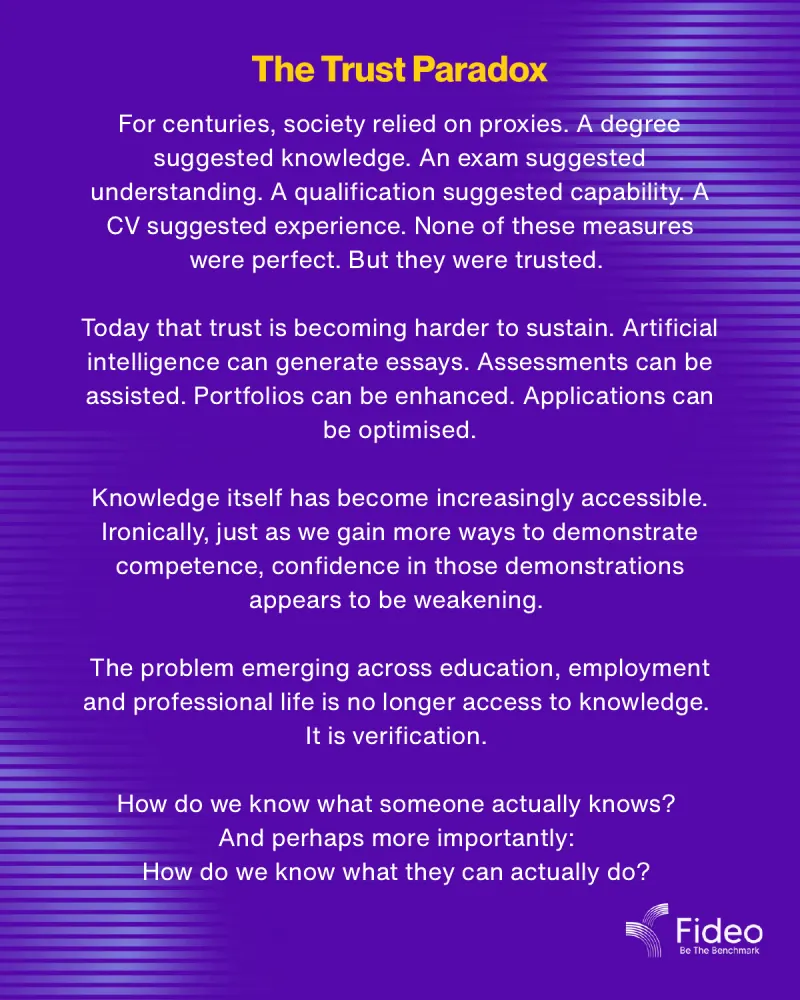
2 / 9 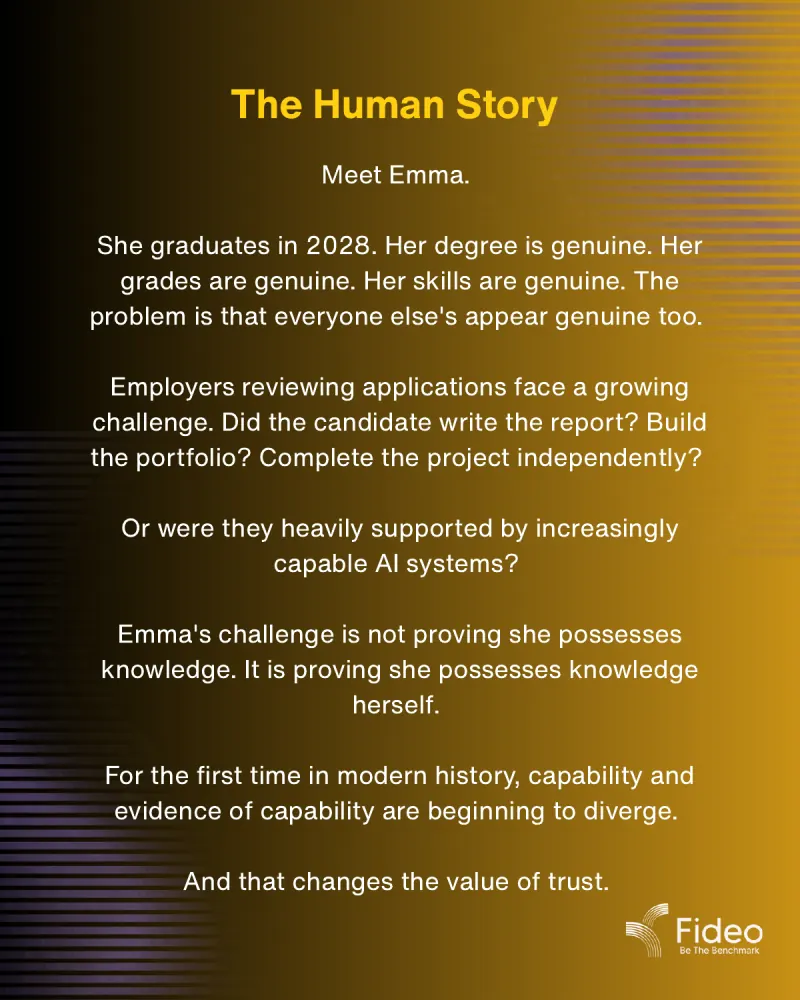
3 / 9 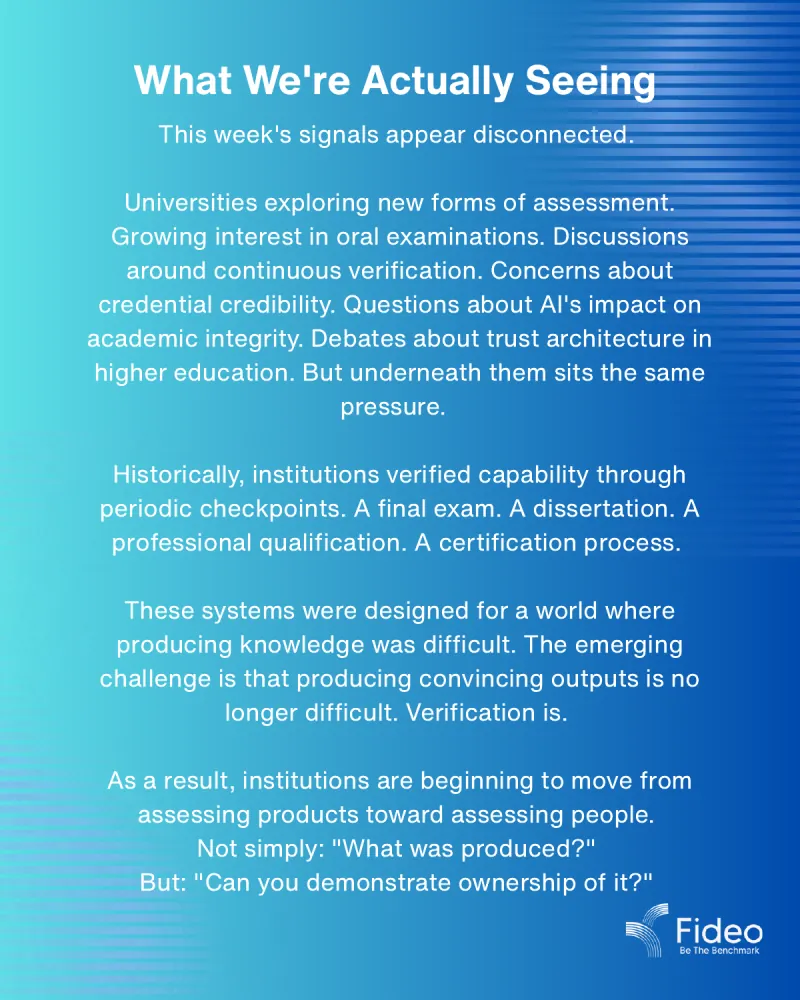
4 / 9 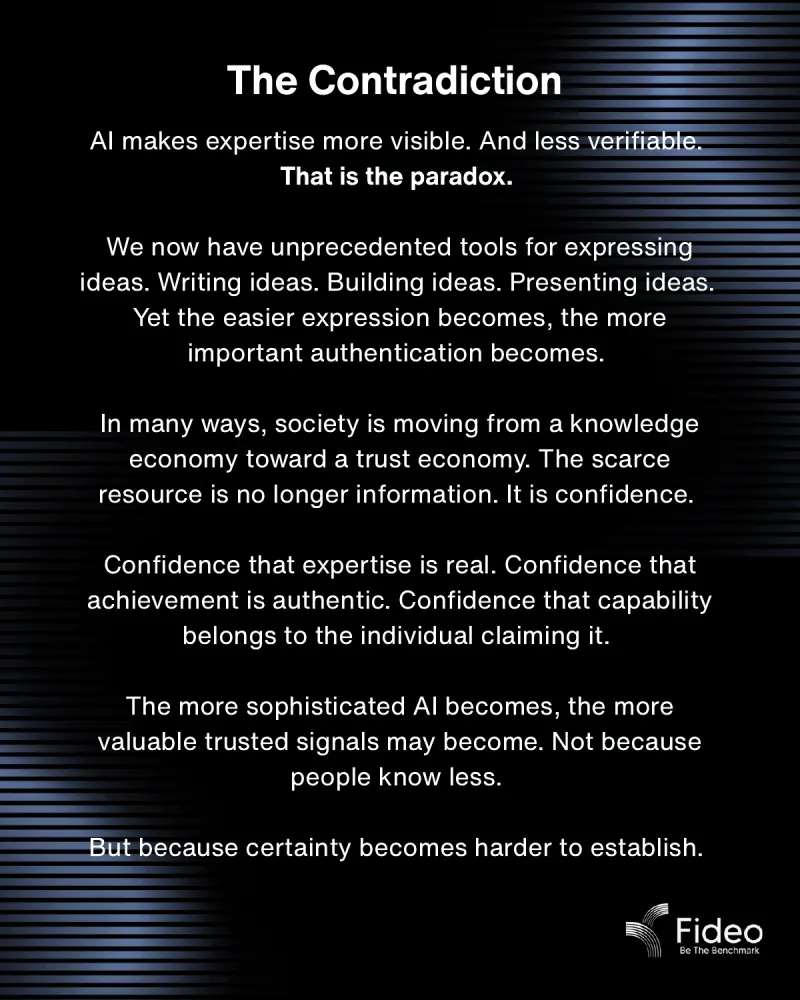
5 / 9 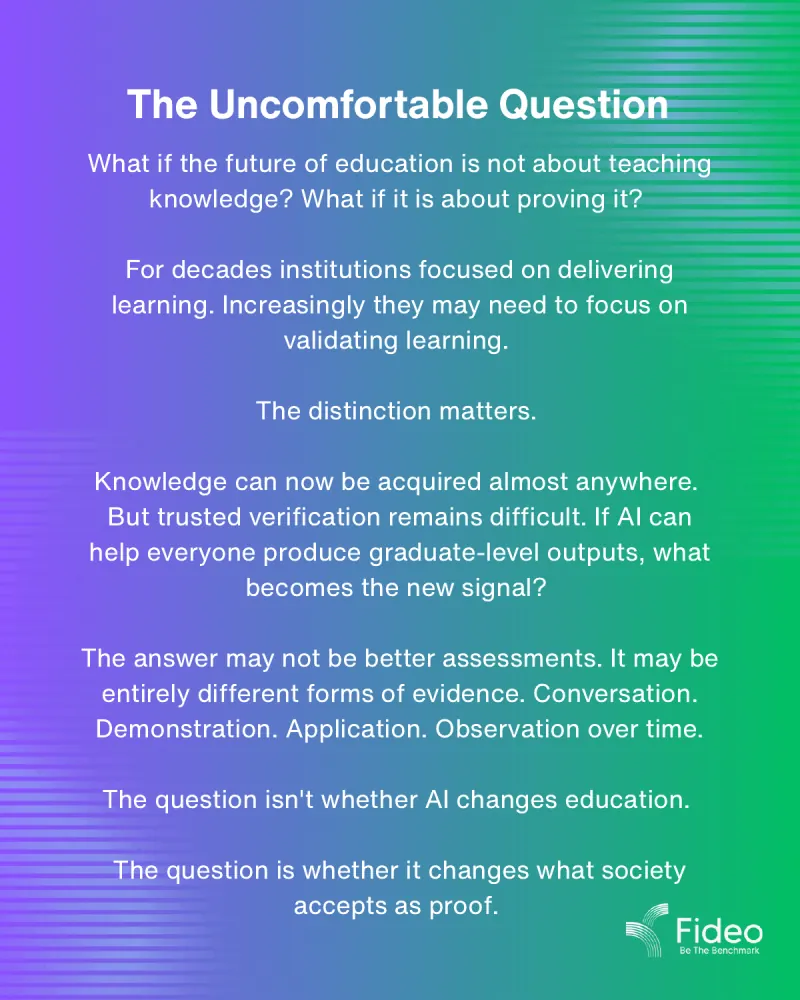
6 / 9 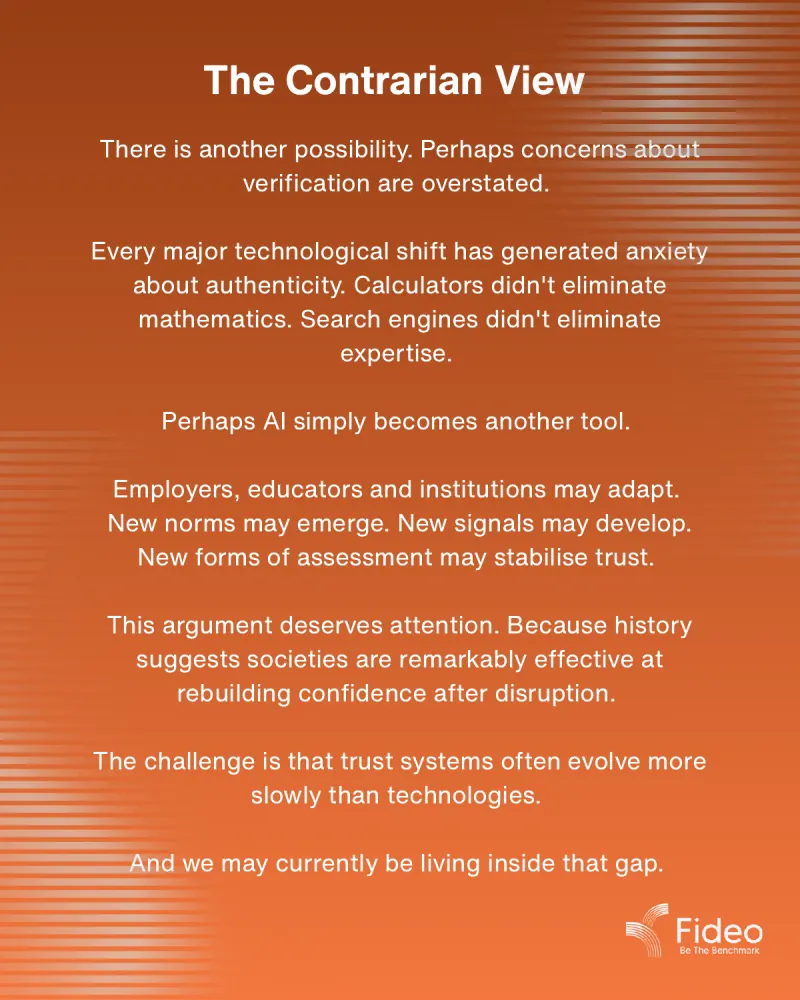
7 / 9 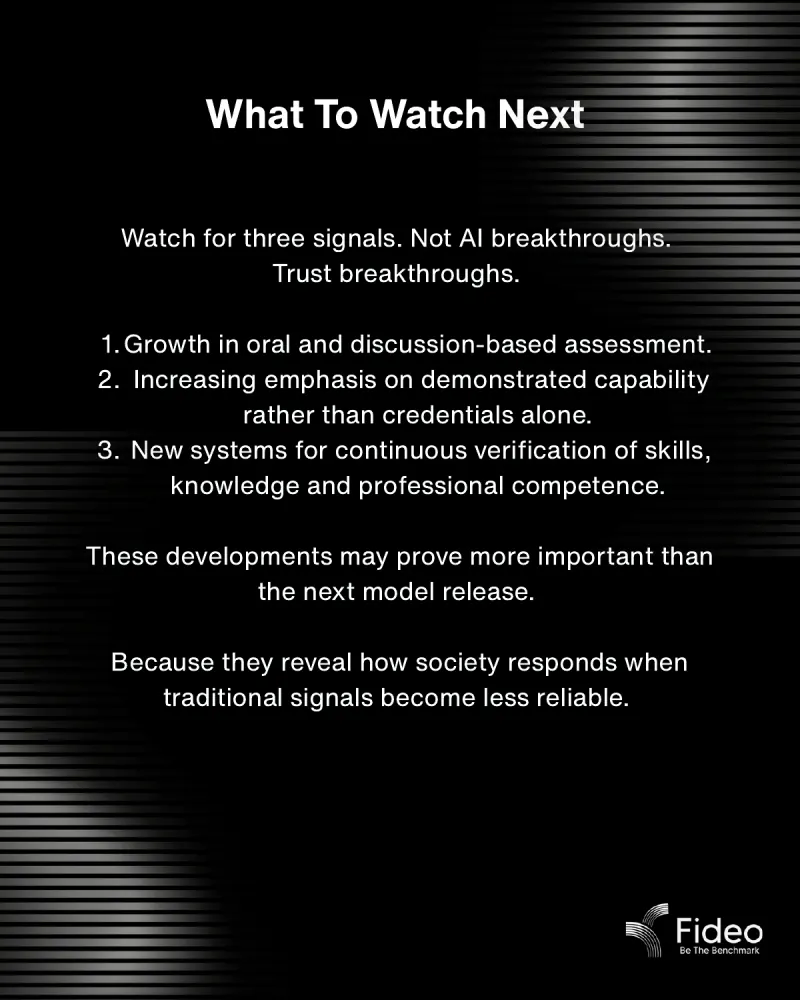
8 / 9 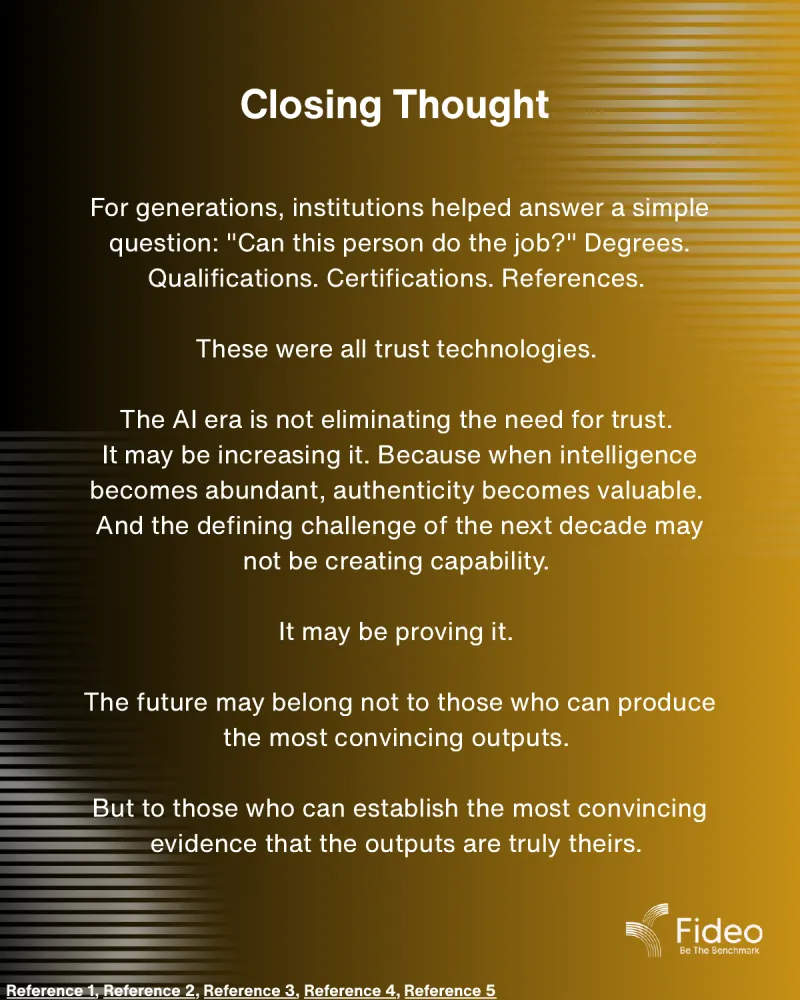
9 / 9
This week in 60 seconds
As AI makes convincing outputs easy to produce, the scarce resource shifts from knowledge to confidence that capability is real.
- Traditional proxies such as degrees, exams, qualifications and CVs were never perfect but were trusted. AI is making that trust harder to sustain.
- Capability and evidence of capability are beginning to diverge, so the problem is no longer access to knowledge but verification.
- Institutions are shifting from assessing products to assessing people, asking whether someone can demonstrate ownership of their work.
- Society may be moving from a knowledge economy to a trust economy, where the scarce resource is confidence rather than information.
- A contrarian view holds that verification fears are overstated, but trust systems often evolve more slowly than technologies.
Read this edition as text (4 min)
The Trust Paradox For centuries, society relied on proxies. A degree suggested knowledge. An exam suggested understanding. A qualification suggested capability. A CV suggested experience. None of these measures were perfect. But they were trusted.
Today that trust is becoming harder to sustain. Artificial intelligence can generate essays. Assessments can be assisted. Portfolios can be enhanced. Applications can be optimised.
Knowledge itself has become increasingly accessible. Ironically, just as we gain more ways to demonstrate competence, confidence in those demonstrations appears to be weakening.
The problem emerging across education, employment and professional life is no longer access to knowledge. It is verification.
How do we know what someone actually knows? And perhaps more importantly: How do we know what they can actually do?
The Human Story
Meet Emma.
She graduates in 2028. Her degree is genuine. Her grades are genuine. Her skills are genuine. The problem is that everyone else's appear genuine too.
Employers reviewing applications face a growing challenge. Did the candidate write the report? Build the portfolio? Complete the project independently?
Or were they heavily supported by increasingly capable AI systems?
Emma's challenge is not proving she possesses knowledge. It is proving she possesses knowledge herself.
For the first time in modern history, capability and evidence of capability are beginning to diverge.
And that changes the value of trust.
What We're Actually Seeing
This week's signals appear disconnected.
Universities exploring new forms of assessment. Growing interest in oral examinations. Discussions around continuous verification. Concerns about credential credibility. Questions about AI's impact on academic integrity. Debates about trust architecture in higher education. But underneath them sits the same pressure.
Historically, institutions verified capability through periodic checkpoints. A final exam. A dissertation. A professional qualification. A certification process.
These systems were designed for a world where producing knowledge was difficult. The emerging challenge is that producing convincing outputs is no longer difficult. Verification is.
As a result, institutions are beginning to move from assessing products toward assessing people. Not simply: "What was produced?" But: "Can you demonstrate ownership of it?"
The Contradiction
AI makes expertise more visible. And less verifiable. That is the paradox.
We now have unprecedented tools for expressing ideas. Writing ideas. Building ideas. Presenting ideas. Yet the easier expression becomes, the more important authentication becomes.
In many ways, society is moving from a knowledge economy toward a trust economy. The scarce resource is no longer information. It is confidence.
Confidence that expertise is real. Confidence that achievement is authentic. Confidence that capability belongs to the individual claiming it.
The more sophisticated AI becomes, the more valuable trusted signals may become. Not because people know less.
But because certainty becomes harder to establish.
The Uncomfortable Question
What if the future of education is not about teaching knowledge? What if it is about proving it?
For decades institutions focused on delivering learning. Increasingly they may need to focus on validating learning.
The distinction matters.
Knowledge can now be acquired almost anywhere. But trusted verification remains difficult. If AI can help everyone produce graduate-level outputs, what becomes the new signal?
The answer may not be better assessments. It may be entirely different forms of evidence. Conversation. Demonstration. Application. Observation over time.
The question isn't whether AI changes education.
The question is whether it changes what society accepts as proof.
The Contrarian View
There is another possibility. Perhaps concerns about verification are overstated.
Every major technological shift has generated anxiety about authenticity. Calculators didn't eliminate mathematics. Search engines didn't eliminate expertise.
Perhaps AI simply becomes another tool.
Employers, educators and institutions may adapt. New norms may emerge. New signals may develop. New forms of assessment may stabilise trust.
This argument deserves attention. Because history suggests societies are remarkably effective at rebuilding confidence after disruption.
The challenge is that trust systems often evolve more slowly than technologies.
And we may currently be living inside that gap.
What To Watch Next
Watch for three signals. Not AI breakthroughs. Trust breakthroughs.
1.Growth in oral and discussion-based assessment. 2. Increasing emphasis on demonstrated capability rather than credentials alone. 3. New systems for continuous verification of skills, knowledge and professional competence.
These developments may prove more important than the next model release.
Because they reveal how society responds when traditional signals become less reliable.
Closing Thought
For generations, institutions helped answer a simple question: "Can this person do the job?" Degrees. Qualifications. Certifications. References.
These were all trust technologies.
The AI era is not eliminating the need for trust. It may be increasing it. Because when intelligence becomes abundant, authenticity becomes valuable. And the defining challenge of the next decade may not be creating capability.
It may be proving it.
The future may belong not to those who can produce the most convincing outputs.
But to those who can establish the most convincing evidence that the outputs are truly theirs.
Sources
- LinkedInlinkedin.com/posts/dr-faisal-sheikh-phd-fcca-bsc-hons-0206a932_trustarchitecture-higheredu
- LinkedInlinkedin.com/posts/sabrinacrowdersimmons_highereducation-ai-leadership-share-7469089854153
- LinkedInlinkedin.com/posts/charlottevonessen_oral-exams-are-growing-in-popularity-as-a-share-74719
- LinkedInlinkedin.com/pulse/age-continuous-verification-mar%C3%ADa-p%C3%ADa-aqueveque-jabbaz-k7thf/
- LinkedInlinkedin.com/posts/cadigan_education-ugcPost-7473015426877112320-tGhM/
More questions about this edition
What signals does the edition suggest watching next?
Three trust breakthroughs rather than AI breakthroughs: growth in oral and discussion-based assessment, more emphasis on demonstrated capability rather than credentials alone, and new systems for continuous verification of skills, knowledge and professional competence.
What forms of evidence might replace traditional assessments?
The edition suggests the answer may not be better assessments but entirely different forms of evidence: conversation, demonstration, application and observation over time.
Why were older verification systems sufficient before AI?
Periodic checkpoints such as final exams, dissertations and certifications were designed for a world where producing knowledge was difficult. Producing convincing outputs is no longer difficult, so verification is now the hard part.
Get the Zeitgeist every Friday
One email a week with the new edition. Unsubscribe in one click.
Check your inbox to confirm your subscription.
Please enter a valid email address and try again.